Services
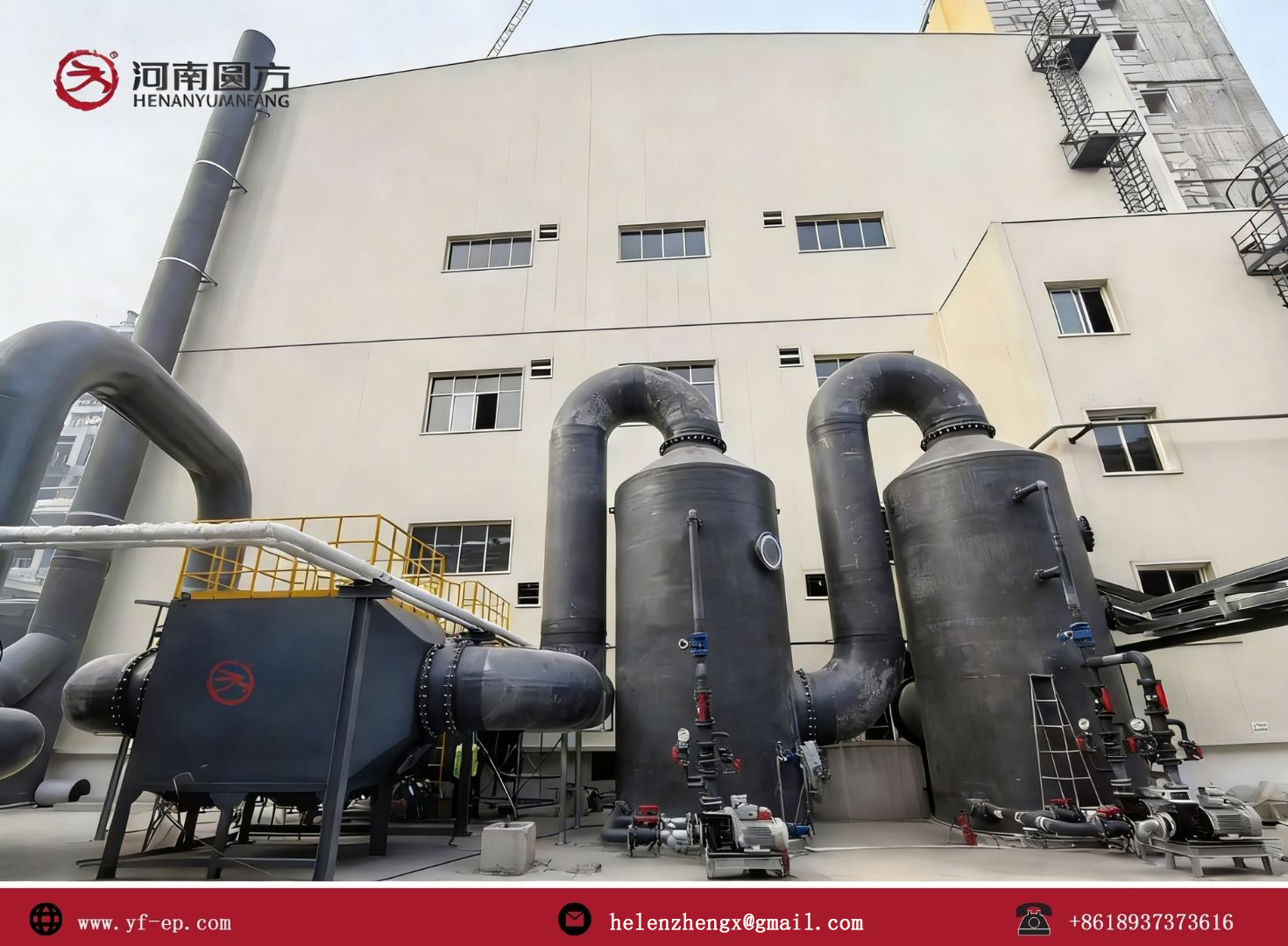
YFEP delivers professional exhaust gas treatment solutions for industrial facilities worldwide — from acid gas scrubbing and odor abatement to VOCs recovery systems.
Our engineering approach follows the EPA National Ambient Air Quality Standards (NAAQS) framework for criteria air pollutants, ensuring every delivered system meets applicable emission limits while maximizing operational efficiency.
Customized Air emissions soluations
Based on the characteristics of different industries, using multi-process combination technology, with 100+ industry cases worldwide, in line with international emission standards.
Environmental protection equipment Production
Provide full-process engineering from design and production to installation of equipment, with complete qualifications, self-owned production bases and professional teams, and strong delivery capabilities.
Air emissions upgrading and reconstruction
Providing diagnosis and reconstruction services for existing waste gas treatment system enterprises. Relying on more than 20 years of industry experience, supported by technical patents.
Explore Our Exhaust Gas Treatment Solutions
Each industry faces unique emission challenges. Browse our specialized solution pages to find the right approach for your facility:
• Acid & Alkali Waste Gas Treatment Projects — proven case studies from chemical, semiconductor, and metallurgy plants
• Industrial Odor Control Projects — wastewater, food processing, and landfill deodorization projects
• VOCs Treatment Projects — coating, printing, pharmaceutical, and PV manufacturing emissions control
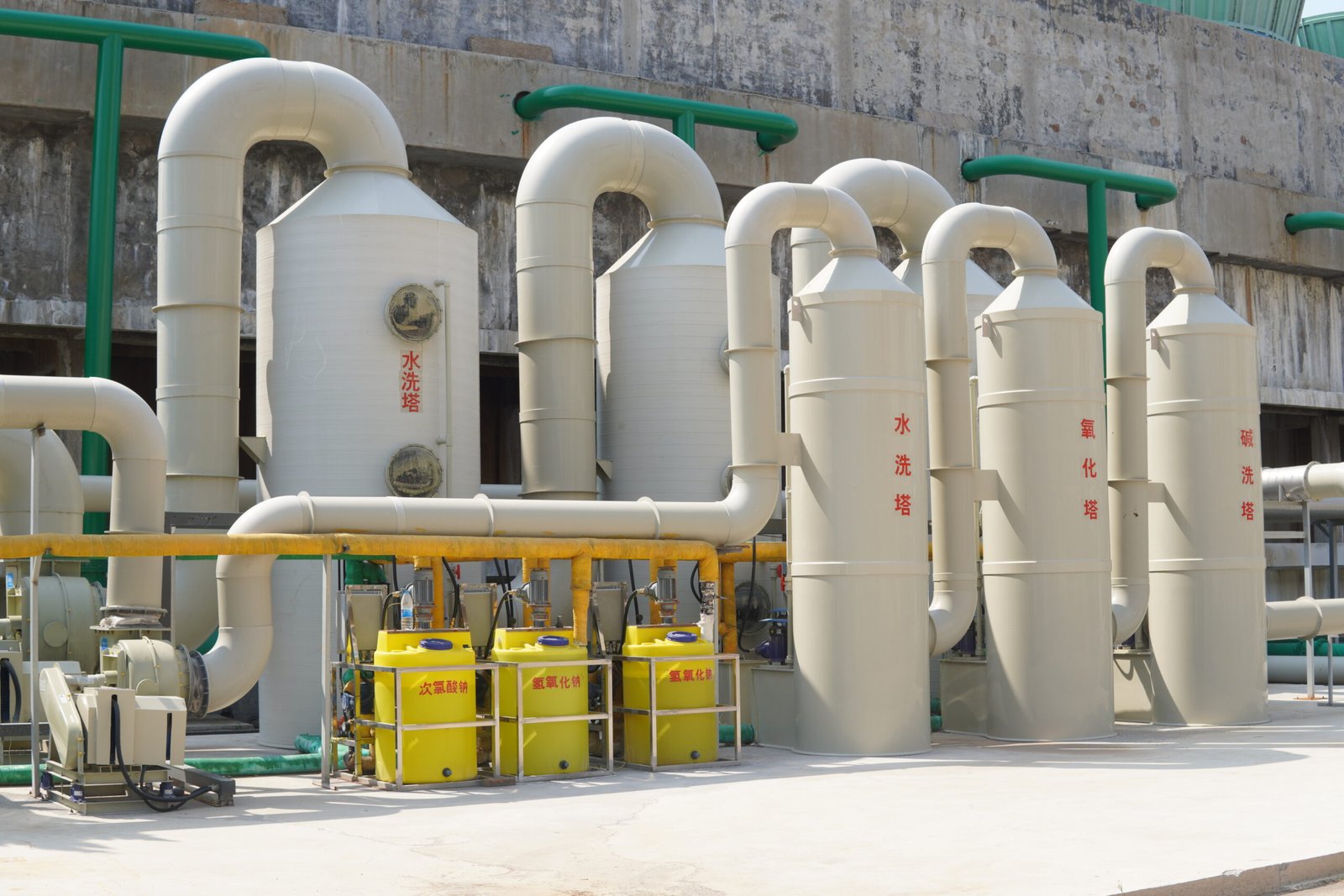
• Acid Gas Scrubber Equipment & Services — packed bed scrubbers, WESP, and chemical absorption systems
• Odor Control Equipment & Engineering — biofilters, chemical scrubbers, and activated carbon systems
• VOCs Treatment Equipment & Technology — RTO, RCO, zeolite rotor, condensation recovery units
• Air Pollution Control Equipment Catalog — browse our full product lineup including spray towers and wet scrubbers
Not sure which solution fits? See our decision guide below or contact our engineering team for free consultation.
VOCs Pollution Control System
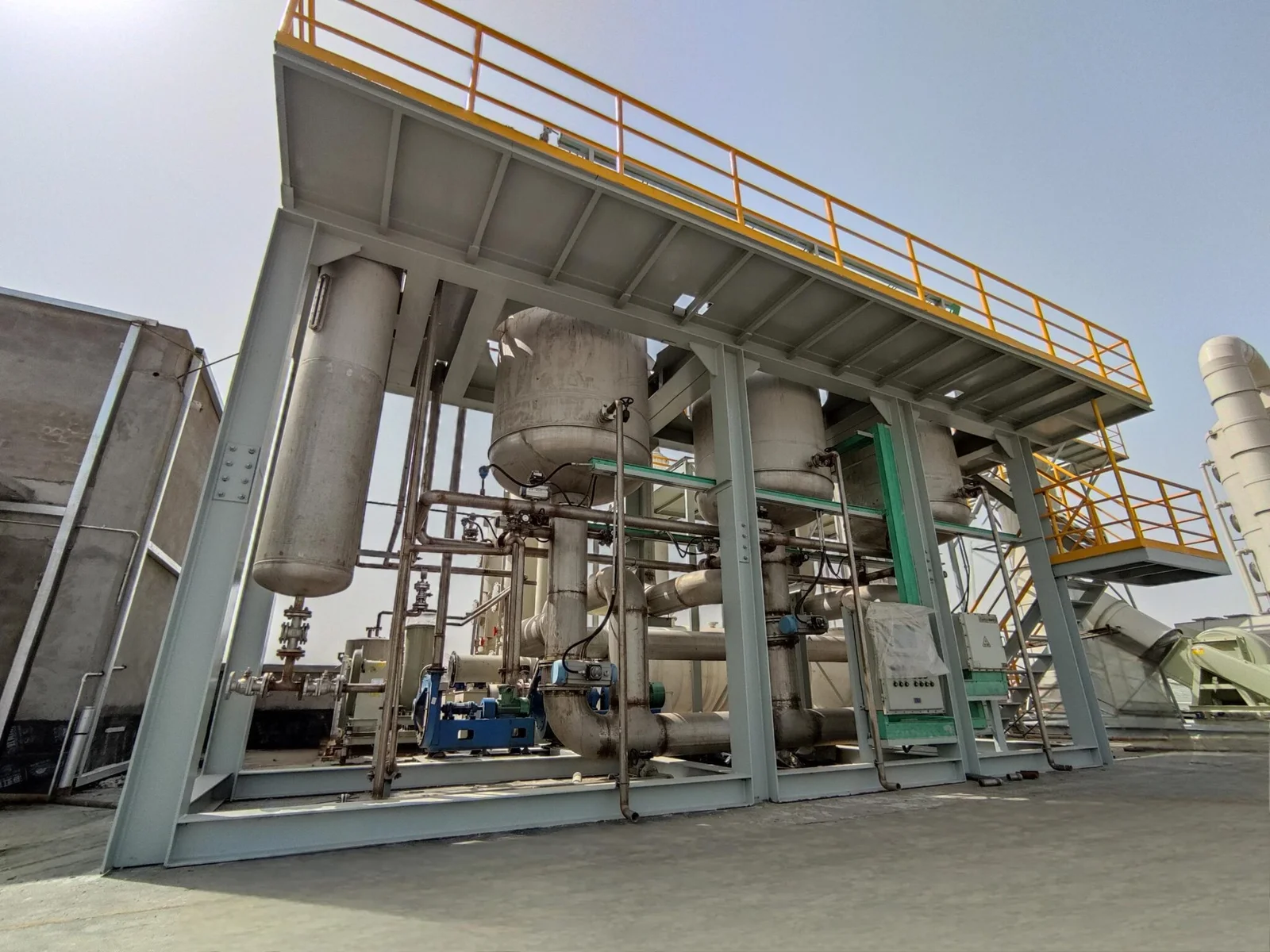
Adopting single or combined treatment methods such as scrubbing towers, catalytic oxidation (CO), regenerative thermal oxidizers (RTO), catalytic combustion with adsorption and desorption, condensation, membrane separation, and zeolite rotors, we treat high/low-concentration volatile organic compound (VOC) from the chemical, pharmaceutical, and other industries. This complies with international emission standards, with a treatment efficiency of ≥95%.
Inorganic Acid and Alkali Pollution Control
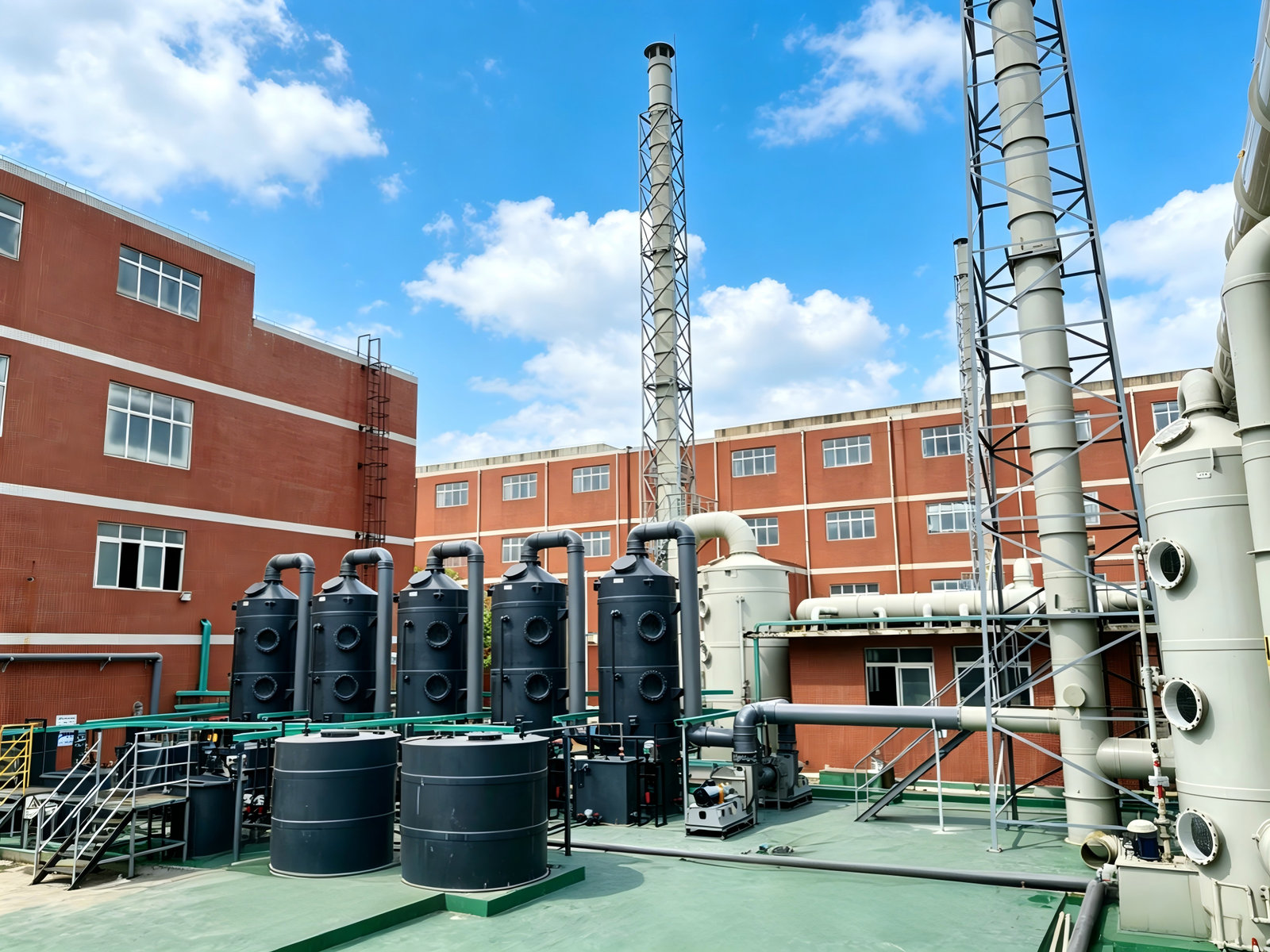
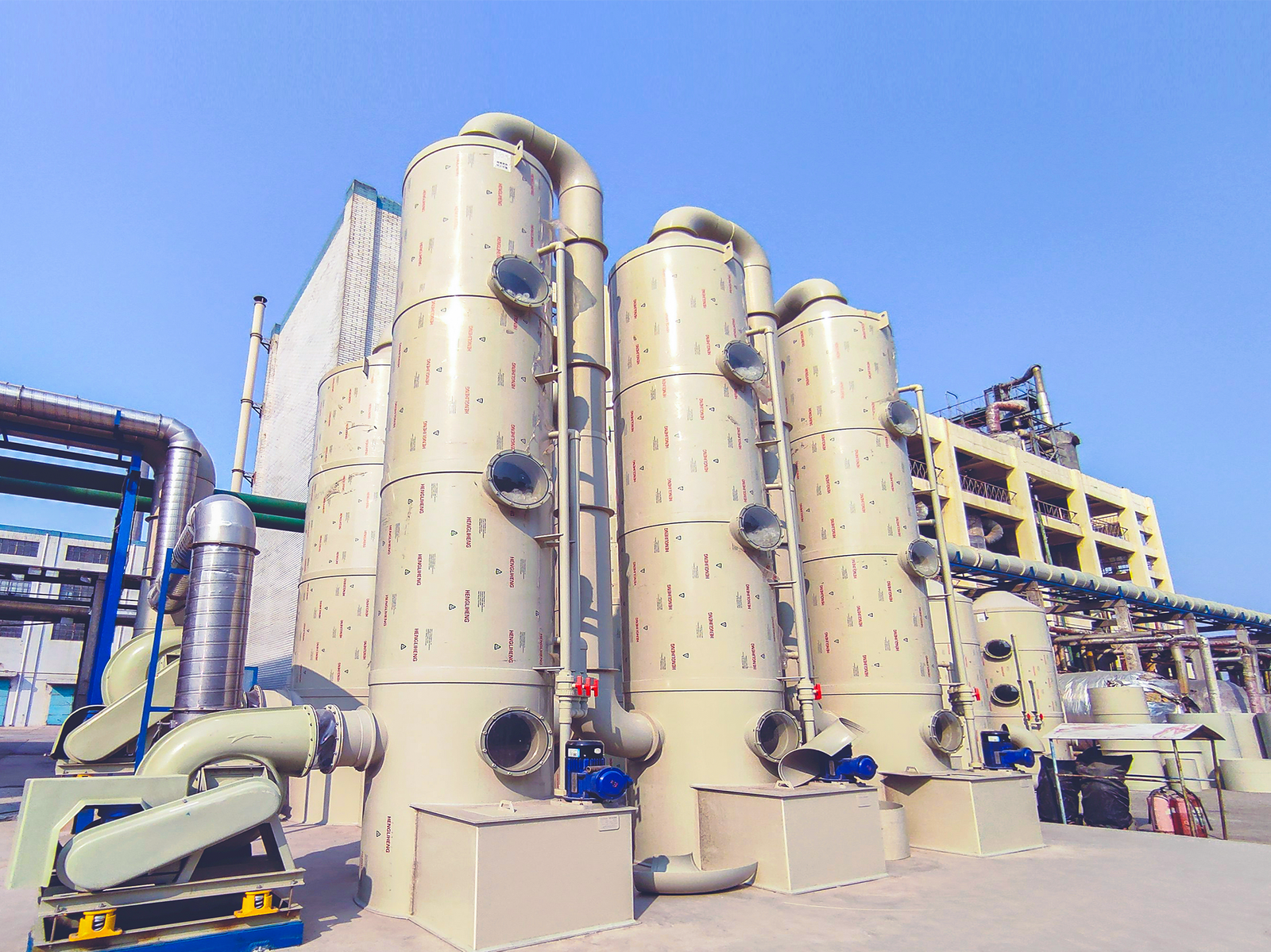
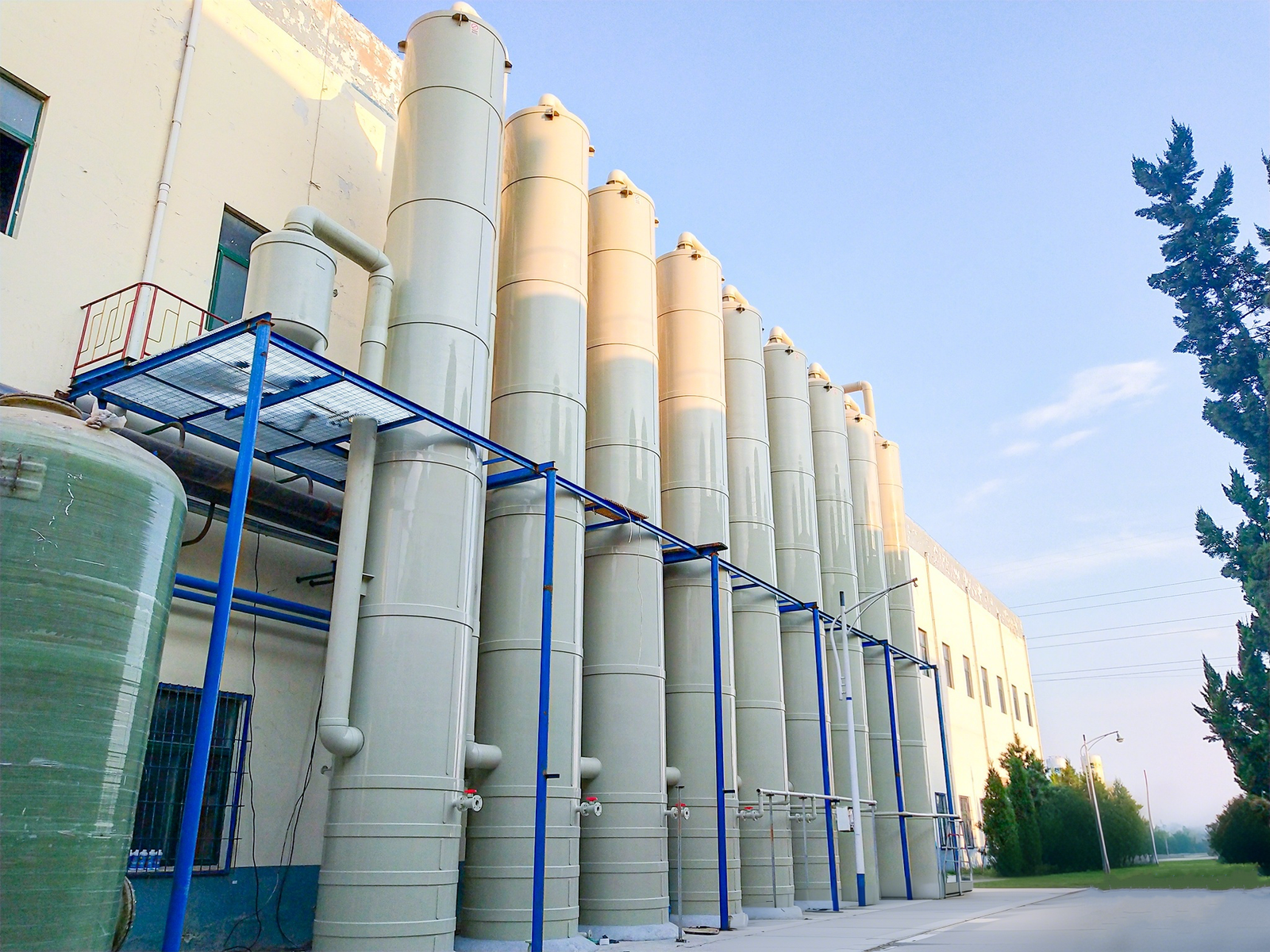
Primarily utilizing single-stage or multi-stage scrubbing towers, corresponding absorbents are used for absorption and neutralization. By controlling parameters such as the tower's gas-liquid ratio, absorbent temperature, and wind speed, efficient removal is achieved to ensure emissions meet standards.
Odor Control Systems
Integrating technologies such as scrubbing absorption, biological treatment, photocatalytic oxidation, and plasma treatment, we address odorous gases in industrial production, wastewater treatment, and municipal sanitation. Emission indicators exceed international standards.
NOx Recycling and Utilization
Through technologies such as series-connected multi-stage scrubbing towers and selective non-catalytic reduction (SNCR), efficient removal of residual tail gases and resource recovery of nitrogen oxides are achieved, reducing energy consumption by 30%-50%. This meets the emission reduction and energy reuse needs of the pharmaceutical, chemical, and other industries.


Resin Adsorption and Desorption Technology
Using adsorption materials such as activated carbon and molecular sieve rotors, combined with thermal desorption regeneration processes, solvent recovery and recycling are achieved, reducing corporate operating costs.
Particulate Matter Exhaust Gas Treatment
We provide single or combined equipment such as wet electrostatic precipitators, cartridge/bag dust collectors, and scrubbing towers, combined with intelligent monitoring systems for treatment. This efficiently removes industrial dust, oil mist, and other particulate matter, with equipment lifespan exceeding 8,000 hours, suitable for harsh operating conditions.

How to Choose the Right Exhaust Gas Treatment Solution
Selecting the correct exhaust gas treatment solution depends on four key factors:
1. Pollutant Type — Identify what you’re treating. Acidic gases (HCl, SO₂, HF) require wet scrubbing or chemical absorption. Volatile organic compounds (solvents, hydrocarbons) respond best to thermal oxidation, adsorption, or condensation recovery. Odorous compounds like H₂S and ammonia may need biofiltration or chemical scrubbing. Many facilities deal with multi-pollutant streams requiring combined systems.
2. Concentration & Flow Rate — High-concentration streams (>1,000 mg/m³) favor recovery technologies (condensation, adsorption) that can offset operating costs. Low-concentration, high-volume streams are better suited for thermal destruction (RTO/RCO) or biological treatment. Always provide accurate inlet data during consultation.
3. Regulatory Requirements — Your local emission limits dictate removal efficiency targets. Some regions require continuous emission monitoring (CEMS), which influences instrumentation choices. Our engineering team reviews applicable standards during the design phase.
4. Total Cost of Ownership — Compare capital cost, energy consumption, media replacement frequency, and waste disposal costs across options. A lower-priced system with high operating costs can exceed the lifetime cost of a premium solution.
Join Us
YUANFANG’s Air Pollution Control System Installations range from complete plant-wide system integration, to system add-on & retrofit, to engineering and design of upgrades to meet evolving emissions requirements.
Waste gas pollutants we have addressed include: airborne particulate matter, acid mist, VOCs, inorganic gases, and combinations of these hazardous air pollutants.
Our industrial air pollution control system design and capabilities include source collection, transport, gas conditioning, and destruction/recovery of the pollutants.
Frequently Asked Questions
What types of industrial exhaust gases require treatment?
Common industrial exhaust gases include acidic pollutants (hydrogen chloride, sulfur dioxide, hydrogen fluoride, nitrogen oxides), volatile organic compounds (solvents, aromatics, aliphatic hydrocarbons), odorous compounds (hydrogen sulfide, ammonia, mercaptans), and hazardous air pollutants (heavy metals, dioxins). The appropriate treatment technology depends on the specific gas composition, concentration, and flow rate of your emission stream.
Can one exhaust gas treatment system handle multiple pollutants?
Yes — multi-pollutant treatment systems are common in industries where processes generate complex emission profiles. For example, semiconductor manufacturing often produces acid gases, VOCs, and particulates simultaneously. YFEP designs integrated systems combining wet scrubbing for acids, activated carbon or thermal oxidizers for VOCs, and bag filters for particulates — all within a single skid-mounted unit.
How do I know which exhaust gas treatment method is best for my facility?
Start with a detailed emission characterization: identify all pollutants, measure concentrations and flow rates, review local regulatory limits, then match to proven technologies. Wet scrubbing excels at soluble acid gases. Thermal oxidation (RTO/RCO) handles high-flow VOC streams efficiently. Biofiltration offers low operating costs for biodegradable odors. Condensation recovery is ideal when solvents can be reclaimed. Most facilities benefit from a professional engineering assessment rather than a one-size-fits-all approach.
What is the typical timeline for an exhaust gas treatment project?
From initial inquiry to commissioning, a standard industrial exhaust gas treatment project takes 8–16 weeks depending on complexity. Phase 1 (1–2 weeks): emission analysis and technology selection. Phase 2 (2–4 weeks): custom engineering design and fabrication drawings. Phase 3 (4–8 weeks): equipment fabrication and quality inspection. Phase 4 (1–2 weeks): delivery, installation, and commissioning. Turnkey projects including civil works may extend to 20–24 weeks.

Adopt multiple combined air pollution control processes such as multi - stage alkaline washing + activated carbon adsorption + catalytic combustion (CO) to treat odorous gases like hydrogen sulfide, ammonia, trimethylamine, and methyl sulfide, as well as complex components such as VOCs, HCl, and SO₂.
Utilize multiple combined air pollution control processes such as dry filtration + activated carbon adsorption + catalytic combustion, or electrostatic oil removal + activated carbon adsorption to control VOCs, particulate matter, and acid mist generated during the production of silicon materials and the manufacturing of lithium - ion batteries.