
VOCs Treatment Project Cases
YFEP delivers professional VOCs treatment solutions tailored to chemical, pharmaceutical, petrochemical, and photovoltaic manufacturing facilities. Our proven systems handle complex VOC mixtures including halogenated compounds (HCl, SO2, Cl2), oil mist, perchloroethylene, and solvent vapors — achieving 95–99.9% removal efficiency across diverse industrial applications.
Explore our VOCs treatment solutions project cases below. Each system is custom-engineered based on actual exhaust gas composition, airflow volume (m³/h), and local emission standards. From multi-stage alkaline scrubbing to catalytic combustion (RCO) and activated carbon adsorption, we design, manufacture, install, and commission every unit on-site.
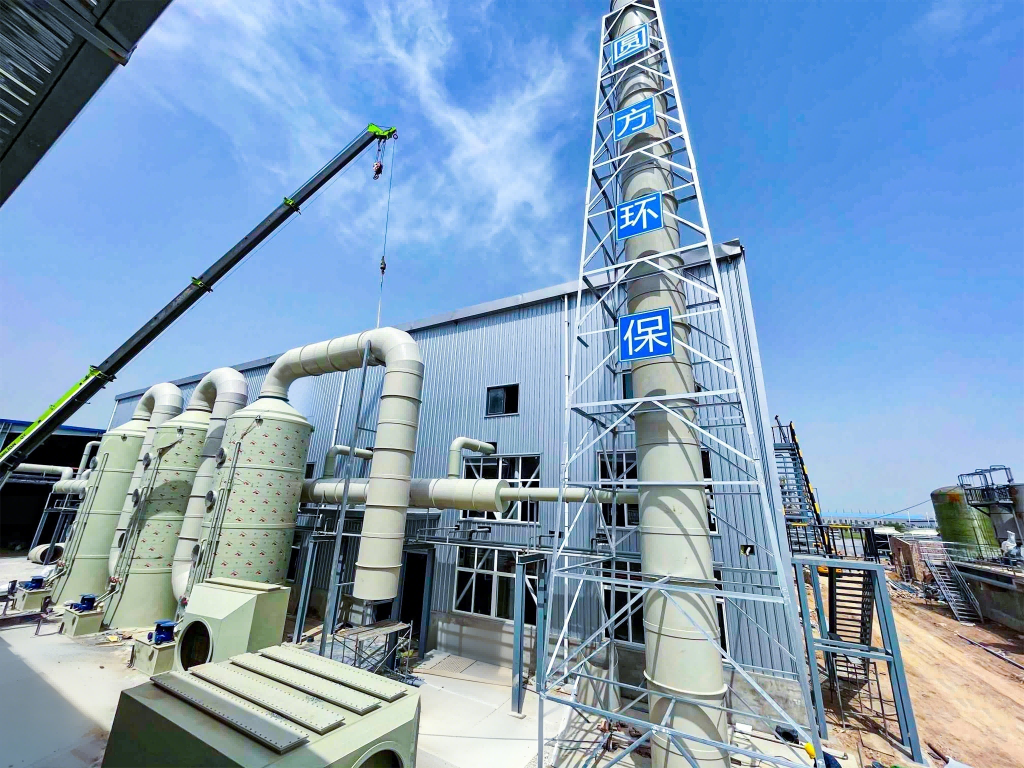
Chemical Enterprise VOCs Exhaust Gas Treatment
| Pollutants | VOCs, HCl, SO₂, Cl₂ |
| Inlet Concentration | 500 mg/m³ |
| Gas Flow Rate | 60,000 m³/h |
| Treatment Process | 3-Stage Alkaline Scrubbing → Demisting → Activated Carbon → 25m Stack |
| Removal Efficiency | 98% |
This project was designed for a large-scale chemical enterprise generating complex exhaust gases containing both organic compounds (VOCs) and corrosive acid gases (HCl, SO₂, Cl₂). We delivered a multi-stage treatment train combining three alkaline scrubbers for acid gas removal, followed by high-efficiency demisters and activated carbon adsorbers for final VOCs polishing. The system has been operating stably since commissioning, consistently achieving 99% removal efficiency while meeting all local emission standards.
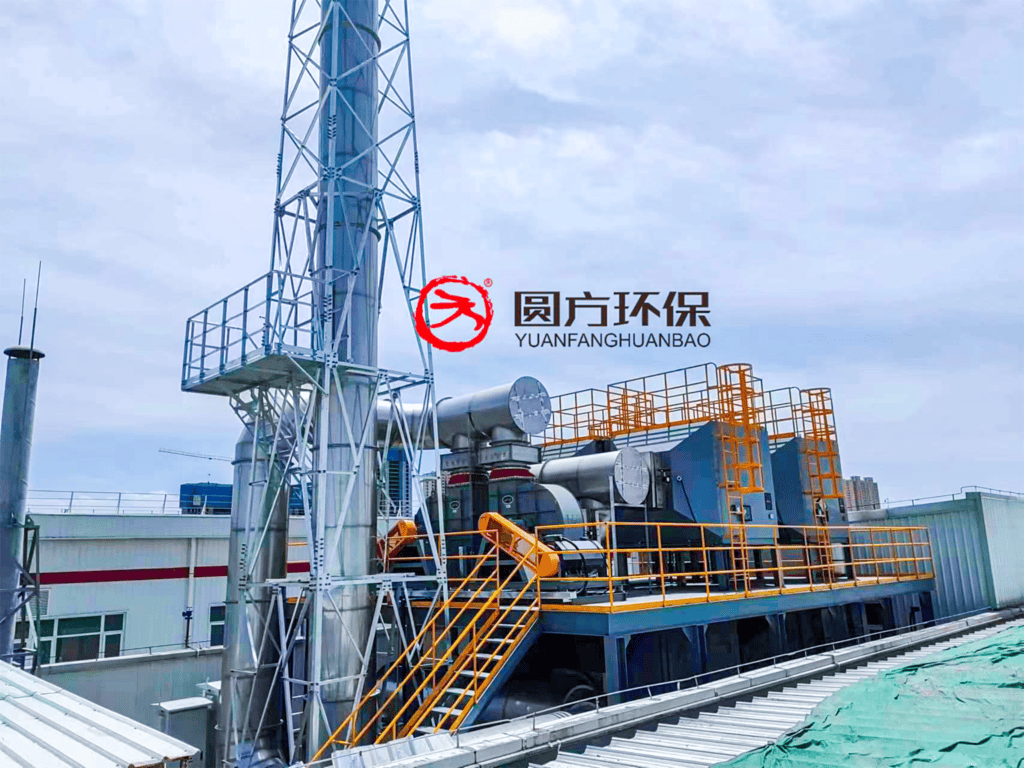
Photovoltaic Manufacturer — Oil Mist & VOCs Removal
| Pollutants | Oil Mist (VOCs) |
| Inlet Concentration | ≤ 200 mg/m³ |
| Gas Flow Rate | 28,000 m³/h |
| Treatment Process | Mesh Filtration → Electrostatic Oil Removal → 2-Stage Activated Carbon |
| Removal Efficiency | ≥ 99% |
A leading photovoltaic semiconductor manufacturer required an integrated solution for oil mist and low-concentration VOCs generated from their production lines. We engineered a compact treatment system combining mesh pre-filtration, electrostatic oil mist elimination, and dual-stage activated carbon adsorption. This combination effectively removes both particulate-laden oil mist and gaseous VOCs in a single treatment train, achieving over 99% overall removal efficiency with minimal footprint.
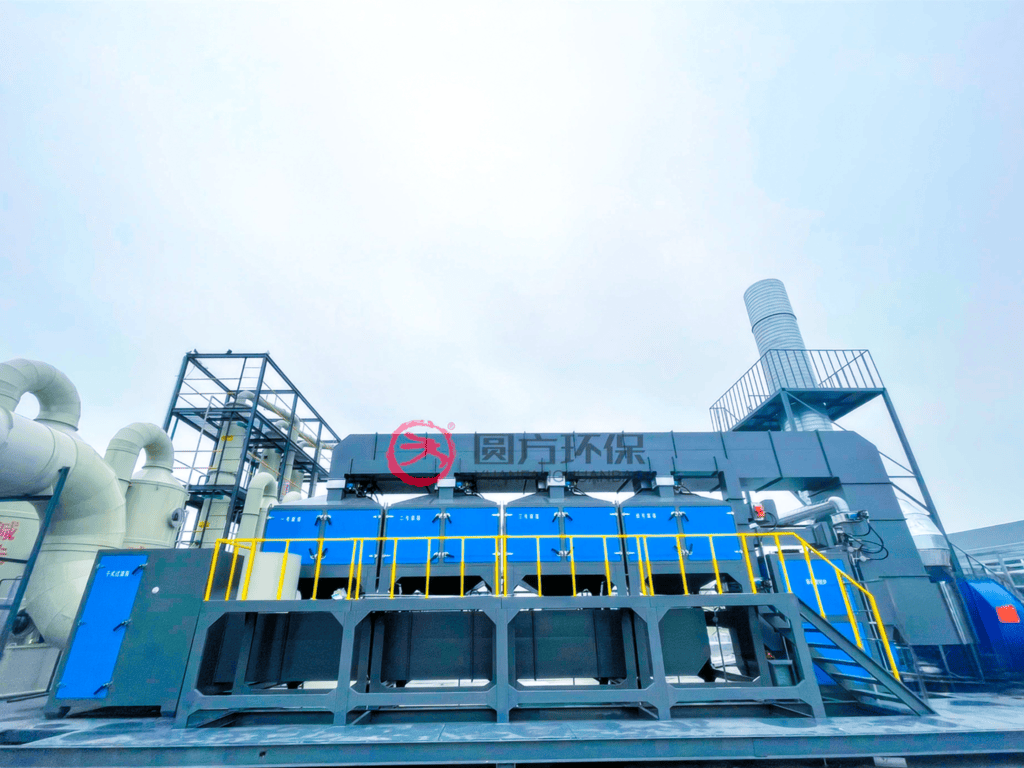
Machinery Manufacturing — Catalytic Combustion System
| Pollutants | Oil Mist (VOCs) |
| Inlet Concentration | < 40 mg/m³ |
| Gas Flow Rate | 50,000 m³/h |
| Treatment Process | Catalytic Combustion (RCO) |
| Removal Efficiency | ≥ 98% |
A machinery manufacturing facility producing oil mist-containing VOCs required a high-efficiency thermal oxidation solution capable of handling fluctuating concentrations and continuous operation. Our catalytic combustion (RCO) system was selected for its ability to achieve deep oxidation of organic pollutants at lower operating temperatures compared to traditional thermal oxidizers. With a catalytic bed optimized for the specific VOC composition, the system consistently delivers ≥98% destruction efficiency while minimizing fuel consumption and operational costs.
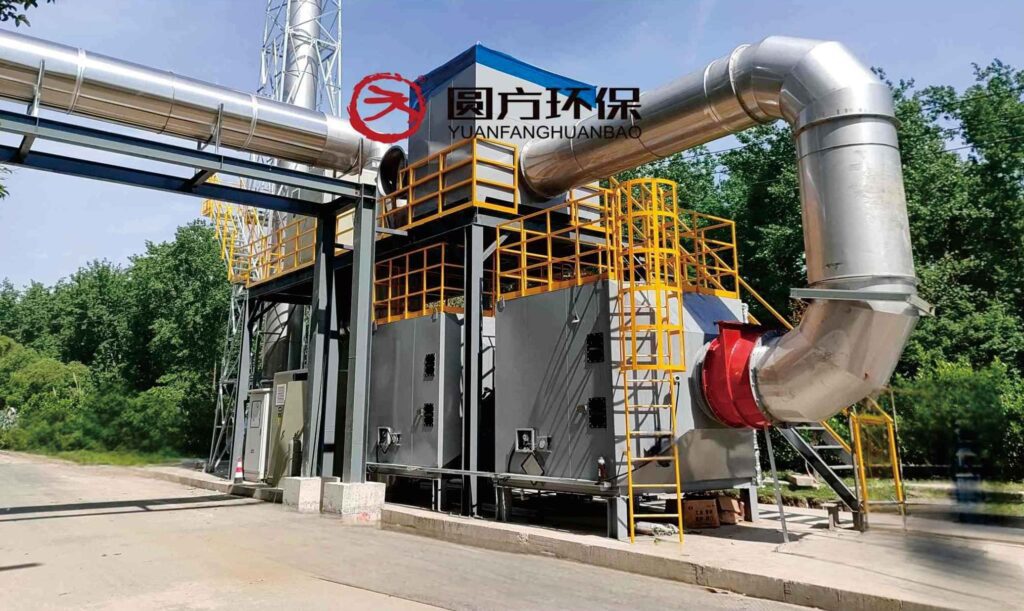
Photovoltaic Manufacturer — Multi-Stage VOCs Treatment
| Pollutants | VOCs, Particulate Matter |
| Gas Flow Rate | 29,500 m³/h |
| Treatment Process | Dry Filter → 1st AC → 2nd AC → Fan → Stack & Support Frame |
| Removal Efficiency | 99% |
This project serves a photovoltaic panel manufacturer whose process generates a mixture of VOCs and fine particulate matter requiring reliable, continuous treatment. We designed a robust multi-stage system starting with dry media filtration for particle capture, followed by two stages of activated carbon beds arranged in series for maximum VOCs removal capacity. The series configuration allows for flexible operation — when one stage is being serviced, the other maintains compliance-level treatment performance.
Comprehensive VOCs Treatment Solutions for Diverse Industrial Applications
Beyond the four case studies above, YFEP provides specialized VOCs treatment solutions across a wide range of industrial scenarios:
• For facilities dealing with acidic or alkaline exhaust streams alongside VOC emissions, explore our acid alkali waste gas treatment solutions.
• If odor control (H2S, NH3, mercaptans) is also a concern at your facility, review our industrial odor control solutions.
• Browse our complete air pollution control equipment catalog including scrubbers, carbon adsorbers, RCO units, and custom-engineered systems.
• Learn how different treatment technologies compare in our guide: What Is a Wet Scrubber and How Does It Work?
• Visit our homepage for an overview of all YFEP environmental engineering services.
For authoritative reference on VOC emissions regulations and industry data from the U.S. Environmental Protection Agency, see the EPA VOC Emissions Overview.
Each VOCs treatment solution we deliver undergoes rigorous factory testing before on-site installation. Contact us for a free exhaust gas assessment.
Need a Custom VOCs Treatment Solution?
Tell us about your exhaust gas composition and flow rate. Our engineering team will provide a preliminary proposal within 24 hours — at no cost.
Frequently Asked Questions About VOCs Treatment Solutions
What types of VOCs can your treatment solutions handle?
Our VOCs treatment solutions cover a broad range of volatile organic compounds commonly found in industrial exhaust: halogenated VOCs (including HCl-bearing, chlorinated, and fluorinated compounds), oil mist and lubricant vapors, solvents such as perchloroethylene, toluene, xylene, esters, and ketones, as well as complex mixed VOC streams from coating, printing, painting, pharmaceutical synthesis, and chemical manufacturing processes. Each treatment system is configured based on the specific VOC species present in your exhaust gas — we don’t use a one-size-fits-all approach.
Which VOCs treatment technology is right for my facility?
The best technology depends on three key factors from your actual exhaust profile: (1) VOC type and concentration level — low-concentration VOCs (<500 mg/m³) typically suit activated carbon adsorption or biofiltration; moderate concentrations respond well to regenerative thermal oxidization (RTO) or catalytic combustion (RCO); high-concentration streams may benefit from condensation recovery first. (2) Airflow volume — small flows (<5,000 m³/h) can use compact packed towers; larger flows require scaled-up systems. (3) Space and budget constraints — we recommend requesting a free site assessment so our engineers can match the most cost-effective VOCs treatment solution to your specific situation.
What removal efficiency can I expect?
Based on our delivered projects shown above: catalytic combustion (RCO) achieves >96% removal; multi-stage activated carbon systems reach 99%+; integrated oil-mist-plus-VOC units exceed 98%; and alkaline scrubbing plus carbon for halogenated VOCs delivers 95%+. Actual performance depends on proper sizing to your exhaust parameters. Every system we deliver is tested at our factory before shipment.
What is the typical project timeline from inquiry to commissioning?
After receiving your exhaust gas composition data and airflow specifications, our engineering team provides a preliminary proposal within 24 hours. Detailed design takes 1–2 weeks depending on complexity. Manufacturing typically requires 3–6 weeks. On-site installation and commissioning take 1–3 weeks depending on system scale and site conditions. Total project delivery from initial inquiry to fully operational is approximately 6–11 weeks for standard VOCs treatment solutions.