
Introduction: Why Food Processing Facilities Face Unique Acid Gas Challenges
Food processing operations—from fermentation tanks and pickling lines to frying stations and rendering plants—generate complex acid-alkali waste gas streams that differ fundamentally from those in traditional chemical manufacturing. While a chemical plant might discharge relatively consistent HCl or H2SO4 mist, a food processing facility often emits a variable cocktail of acetic acid, lactic acid, hydrogen sulfide, ammonia, fatty acid aerosols, and organic particulate matter that condenses into a sticky, fouling mass inside treatment equipment. This unique composition makes clogging the single most persistent operational headache for pollution control engineers in the food sector.
- Introduction: Why Food Processing Facilities Face Unique Acid Gas Challenges
- Understanding Falling Film Absorption: Principles and Advantages
- Why Falling Film Over Packed or Spray Towers?
- Clogging Mechanisms in Food Processing Waste Gas Systems
- 1. Organic Aerosol Condensation (The “Sticky” Problem)
- 2. Carbonate and Phosphate Scaling
- 3. Biofilm Formation
- Anti-Clogging Design Strategies: Engineering Your Way Out of Blockages
- Tube Geometry and Material Selection
- Liquid Distribution System Design
- Pre-Treatment: Quench and Knockout
- Operating Cost Analysis: Where the Money Goes
- Chemical Optimization: The Biggest Lever
- Pump Energy Optimization
- Case Study: Soy Sauce Fermentation Facility, Guangdong Province
- O&M Best Practices for Long-Term Reliability
- Weekly Checks (Operator-Level)
- Monthly Preventive Maintenance
- Quarterly Chemical Cleaning Protocol
- Annual Comprehensive Inspection
- Selecting the Right Falling Film Absorber: A Practical Checklist
- Conclusion: Prevention Beats Remediation
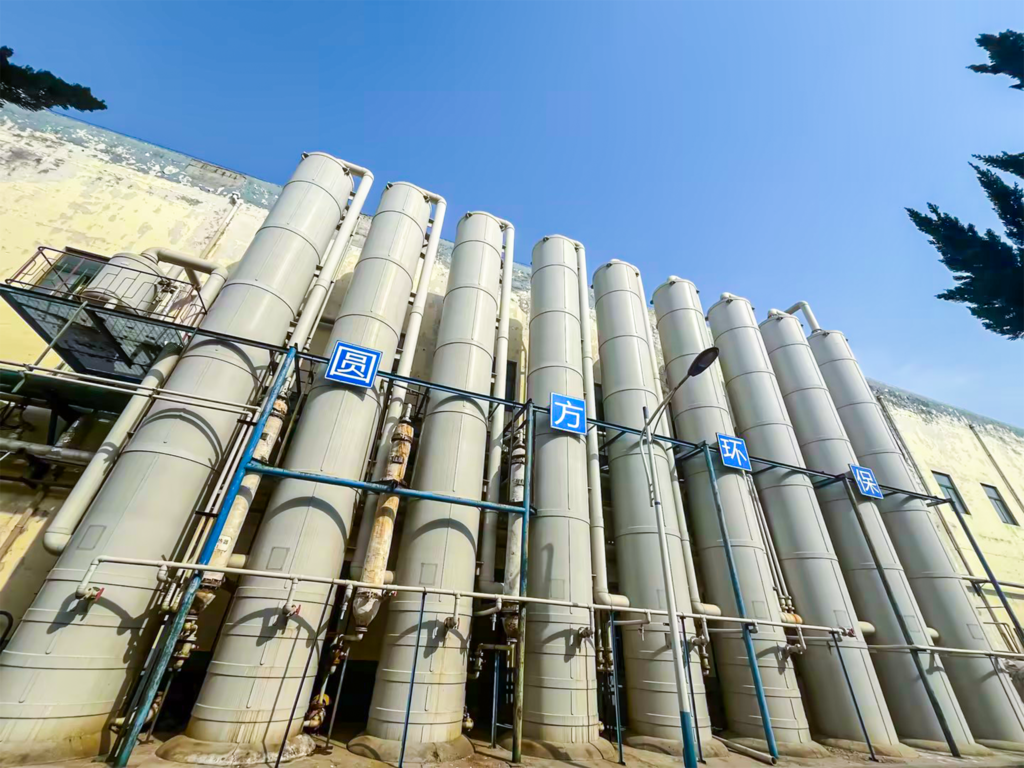
Among the available wet scrubbing technologies, the falling film absorption tower (降膜吸收塔) has emerged as a particularly suitable solution for food-grade acid gas treatment. Its vertical shell-and-tube configuration, where process gas contacts a thin liquid film flowing downward along tube walls, delivers high mass transfer efficiency while simplifying maintenance access. However, without deliberate anti-clogging design measures, even a well-specified falling film absorber can suffer from scaling, biofouling, and pressure drop escalation within weeks of commissioning.
This article provides a practical engineering guide to falling film absorption tower design, anti-clogging strategies, and operating cost optimization specifically tailored for food processing acid waste gas applications. We draw on real project data from multiple food industry installations across Asia to illustrate what works, what fails, and how to achieve reliable compliance at the lowest lifecycle cost.
Understanding Falling Film Absorption: Principles and Advantages
A falling film absorption tower operates on a deceptively simple principle: scrubbing liquid is distributed across the top of vertical tube bundles, forming a thin, gravity-driven film along the inner walls of each tube. The contaminated gas stream flows co-currently or counter-currently through the tubes, where acidic contaminants transfer from the gas phase into the liquid film via absorption and chemical reaction. The scrubbed gas exits at the top or bottom, while the spent liquor drains to a sump for recirculation or treatment.
Why Falling Film Over Packed or Spray Towers?
For food processing applications, falling film absorbers offer three distinct advantages over conventional packed towers and spray scrubbers:
1. Resistance to Particulate Fouling. Packed tower media—whether random packing (Raschig rings, Pall rings) or structured packing sheets—provides countless crevices where sticky organic aerosols can accumulate. Once packing fouls, removal and cleaning require a full shutdown. Falling film absorbers, by contrast, present a smooth vertical tube surface with no interstitial spaces for debris to lodge. A well-designed liquid distributor maintains continuous film coverage that actively washes the tube walls during operation.
2. Superior Heat Transfer. Food processing exhaust gases often arrive at elevated temperatures (60–120°C) from cooking, drying, or frying processes. The falling film configuration allows simultaneous heat and mass transfer: the scrubbing liquid cools the gas while absorbing contaminants, protecting downstream ductwork and fans from hot, corrosive conditions. Packed towers lack this integrated cooling capability.
3. Lower Liquid-to-Gas Ratios. Falling film absorbers achieve equivalent removal efficiencies at L/G ratios 30–50% lower than spray towers, translating directly into reduced pumping energy, smaller recirculation tanks, and less wastewater generation—all meaningful cost drivers in food plants where water usage is already under regulatory scrutiny.
| Parameter | Falling Film Absorber | Packed Tower | Spray Tower |
|---|---|---|---|
| Typical L/G ratio (kg/kg) | 1.5–3.0 | 2.5–5.0 | 3.0–8.0 |
| Fouling resistance | Excellent | Poor–Moderate | Good |
| Heat transfer capability | High | Low | Moderate |
| Pressure drop (Pa/m) | 100–300 | 200–600 | 150–400 |
| Maintenance accessibility | Good (tube bundle) | Poor (packing removal) | Good (nozzle access) |
Clogging Mechanisms in Food Processing Waste Gas Systems
Before selecting anti-clogging countermeasures, engineers must understand the specific fouling pathways active in their process. In food industry applications, three distinct mechanisms typically operate simultaneously:
1. Organic Aerosol Condensation (The “Sticky” Problem)
Fatty acids, cooking oil mist, and protein-derived aerosols exit the process at vapor-phase concentrations that exceed saturation as the gas cools inside the absorber. Unlike inorganic acid mist that remains dissolved or suspended, these organics condense into a tacky film that adheres aggressively to metal and plastic surfaces. Over days to weeks, this organic layer captures additional particulate matter—flour dust, spice powder, starch granules—forming a composite deposit that progressively constricts gas passages.
2. Carbonate and Phosphate Scaling
Food processing washdown water often introduces calcium, magnesium, and phosphate ions into the scrubbing circuit. When the scrubbing liquor pH rises above 8.5 (necessary for acid gas neutralization), these ions precipitate as calcium carbonate (CaCO3) and calcium phosphate scales on tube walls, pump impellers, and spray nozzles. Unlike organic fouling, scale deposits are hard and crystalline, requiring mechanical or chemical descaling rather than simple flushing.
3. Biofilm Formation
The nutrient-rich environment inside a food plant scrubber—warm, moist, with abundant organic carbon sources—provides ideal conditions for microbial growth. Within two to four weeks of commissioning, a biofilm layer forms on wetted surfaces, contributing 0.5–2.0 mm of additional fouling thickness. While biofilm alone rarely causes catastrophic blockage, it accelerates the adhesion of organic aerosols and scale particles, and can produce corrosive metabolites (organic acids, H2S) that attack stainless steel components.
Anti-Clogging Design Strategies: Engineering Your Way Out of Blockages
Effective clogging prevention in falling film absorbers is achieved through design-phase decisions, not just operational Band-Aids. The following strategies have been validated across multiple food processing installations:
Tube Geometry and Material Selection
The first line of defense is the absorber tube itself. We recommend:
- Minimum tube ID of 38 mm (1.5 inch) for food-grade applications, up from the 25 mm standard used in clean chemical service. Larger diameters reduce the probability that a fouling deposit can completely occlude a tube.
- PTFE-lined or glass-lined tubes for high-fouling streams. The low surface energy of fluoropolymers (surface energy ~18–20 mN/m) dramatically reduces organic adhesion compared to stainless steel (~40 mN/m) or polypropylene (~30 mN/m).
- Electropolished 316L stainless steel as a cost-effective alternative. Achieving Ra ≤ 0.4 μm surface roughness reduces foulant nucleation sites by approximately 60% relative to standard 2B mill finish.
- Avoid copper and brass alloys. Even trace copper ions can catalyze oxidation reactions in food-derived organic residues, producing dark, tenacious deposits.
Liquid Distribution System Design
Uneven liquid distribution is the root cause of most falling film absorber failures. Dry spots on tube walls invite localized fouling that propagates rapidly. Key design provisions include:
- Weir-type distributors with V-notch overflow channels rather than orifice-type distributors, which are prone to plugging from particulate matter. Weir distributors maintain uniform flow even when 20–30% of individual notches become partially obstructed.
- Dual-stage filtration on the recirculation line: a 500 μm wedge-wire self-cleaning strainer followed by a 100 μm cartridge filter. The strainer handles the bulk of suspended solids; the cartridge polishes the stream to protect distributor orifices.
- Wetting rate maintained above 0.15 kg/(m·s) per tube perimeter. Below this threshold, film breakup occurs, creating stagnant zones that foul rapidly.
Pre-Treatment: Quench and Knockout
For streams with high organic aerosol loading (> 50 mg/Nm³), a quench section upstream of the falling film absorber provides critical protection. A water-spray quench chamber cools the gas to below the dew point of the heaviest organic fractions, condensing them into droplets that are removed by a downstream chevron-type mist eliminator. This single modification has been shown to extend absorber cleaning intervals from 4 weeks to over 6 months in edible oil processing applications.
Operating Cost Analysis: Where the Money Goes
Understanding the total cost of ownership (TCO) for a falling film absorption system requires looking beyond the initial capital expenditure. For a typical food processing installation treating 20,000 Nm³/h of mixed acid gas, the 10-year cost breakdown typically distributes as follows:
- Capital equipment (absorber, pumps, tank, controls): 30–35% of TCO
- Chemical consumption (NaOH or Ca(OH)₂): 25–30% of TCO
- Electrical energy (pumps & fans): 15–20% of TCO
- Maintenance labor & spare parts: 10–15% of TCO
- Wastewater disposal: 5–10% of TCO
Chemical Optimization: The Biggest Lever
NaOH consumption constitutes the single largest operating cost. In well-operated systems, stoichiometric NaOH usage is approximately 0.8 kg per kg of HCl equivalent removed. In poorly controlled systems with excessive blowdown rates, consumption can exceed 1.5 kg/kg—nearly double. Two strategies consistently deliver 20–35% chemical savings:
pH cascade control with feed-forward. Rather than simple on-off pH control, a cascade loop that uses inlet gas concentration (from an online HCl sensor or process data) as a feed-forward signal can anticipate demand changes and adjust caustic dosing rate before the sump pH deviates. This eliminates the overshoot-and-overshoot cycling that wastes chemicals.
Conductivity-based blowdown. Continuous blowdown at a fixed rate wastes both water and residual chemicals. A conductivity-controlled blowdown valve that opens only when dissolved solids reach a setpoint threshold (typically 50,000–80,000 μS/cm for NaOH systems) can reduce blowdown volume by 40–60% while maintaining scrubbing efficiency.
Pump Energy Optimization
Recirculation pumps typically account for 60–70% of the system’s electrical load. Installing a variable frequency drive (VFD) on the recirculation pump and tying its speed to the actual gas flow rate (rather than running at design maximum continuously) yields typical energy savings of 25–40%. For a 15 kW pump operating 8,000 hours per year, this represents approximately 30,000–48,000 kWh saved annually, translating to a VFD payback period of 12–18 months.
Case Study: Soy Sauce Fermentation Facility, Guangdong Province
A large-scale soy sauce producer in southern China operated three packed-bed scrubbers for treating acid gas from their fermentation and blending workshops. The gas stream (approximately 12,000 Nm³/h) contained acetic acid vapor, ethanol, trace H2S, and significant quantities of koji mold spores and protein particulates. Despite monthly chemical cleaning, the packed beds required complete media replacement every 8–10 months due to irreversible biofouling.
In 2024, the facility replaced one packed-bed unit with a falling film absorption tower incorporating the anti-clogging design features described above. Key specifications:
- 316L electropolished tubes, 42 mm ID, 4.5 m length, 180-tube bundle
- Weir-type liquid distributor with dual-stage recirculation filtration
- Quench spray section with chevron mist eliminator upstream
- VFD-controlled recirculation pump with pH cascade control
- Conductivity-based automatic blowdown
Results after 18 months of continuous operation:
- Tube bundle inspection at 6-month intervals showed negligible fouling; first manual cleaning performed at 14 months (vs. monthly for packed bed)
- NaOH consumption reduced by 27% (from 18.5 to 13.5 tonnes/month)
- Electricity consumption decreased by 34%
- Acetic acid removal efficiency maintained at > 96% throughout the monitoring period
- Annual maintenance cost reduced by approximately 62%
- Total annual operating cost savings: approximately ¥280,000 (USD $38,500)
O&M Best Practices for Long-Term Reliability
Even the best-designed falling film absorber requires disciplined operation and maintenance to sustain performance. The following practices, derived from food industry installations, prevent most common failure modes:
Weekly Checks (Operator-Level)
- Inspect liquid distributor through observation ports for uneven flow patterns or visible notching obstruction
- Record sump pH, conductivity, liquid level, and differential pressure across the absorber
- Check self-cleaning strainer backwash cycle for proper operation; verify cartridge filter differential pressure
- Listen for pump cavitation or bearing noise—indicators of sump level or suction strainer issues
Monthly Preventive Maintenance
- Replace 100 μm cartridge filters (sooner if ΔP exceeds 0.5 bar)
- Inspect and clean pH and conductivity probe tips; recalibrate against buffer standards
- Check tube sheet for signs of uneven wetting; use a borescope to inspect 5–10% of tubes for internal deposits
- Verify chevron mist eliminator pressure drop; clean if ΔP exceeds design value by > 25%
Quarterly Chemical Cleaning Protocol
When inspection reveals fouling deposits exceeding 0.5 mm thickness, perform a circulation chemical clean without tube bundle removal:
- Drain the sump and rinse with fresh water for 15 minutes
- Circulate 5% citric acid solution (heated to 50–60°C) for 2–4 hours to dissolve carbonate/phosphate scales
- Follow with 2% sodium hypochlorite circulation for 1 hour to oxidize and remove organic biofilm residues (Note: verify material compatibility; use non-chlorinated alkaline detergent for 304 stainless steel systems)
- Final fresh water rinse until discharge pH and conductivity match makeup water
Annual Comprehensive Inspection
- Remove and inspect 10–20% of tube bundle for pitting corrosion, especially at liquid inlet zones
- Ultrasonic thickness measurement on tube sheet and shell welds
- Replace all gaskets and O-rings on distributor assembly, access hatches, and flanged connections
- Full pump overhaul: replace mechanical seals, inspect impeller and volute for erosion/corrosion
- Recalibrate all instrumentation (pH, conductivity, flow, pressure transmitters)
Selecting the Right Falling Film Absorber: A Practical Checklist
When evaluating falling film absorption tower proposals for food processing applications, use this checklist to separate well-engineered systems from commodity equipment:
- ☐ Tube ID ≥ 38 mm for fouling service (do not accept 25 mm standard)
- ☐ Weir-type distributor specified, not orifice-type
- ☐ Dual-stage recirculation filtration with automatic backwash strainer
- ☐ VFD on recirculation pump with gas flow rate interlock
- ☐ Conductivity-controlled blowdown (not fixed-rate timer)
- ☐ pH cascade control with feed-forward capability
- ☐ Observation ports at distributor level and tube sheet for routine inspection
- ☐ Material certificates for all wetted components (316L minimum for food-grade acid service)
- ☐ Quench/pre-treatment section if organic aerosol loading exceeds 50 mg/Nm³
- ☐ Chemical cleaning connections pre-installed for CIP (clean-in-place) capability
Conclusion: Prevention Beats Remediation
Clogging in food processing acid gas scrubbers is not an inevitable operational burden—it is an engineering problem with well-understood solutions. The falling film absorption tower, when designed with larger tube diameters, appropriate surface finishes, robust liquid distribution, and upstream pre-treatment, can deliver extended maintenance intervals of 12–18 months while consuming 20–35% less chemicals and energy than equivalent packed-bed systems.
The key takeaway for facility engineers and environmental managers is this: invest in anti-clogging features at the design and procurement stage. The incremental cost of electropolished tubes, a weir distributor, and a VFD-controlled pump—typically 15–25% added to the base equipment cost—pays back within 12–24 months through reduced chemical consumption, lower maintenance labor, and avoided production downtime. In the food processing sector, where production lines run continuously and unplanned shutdowns cascade into product loss, the reliability premium of a properly specified falling film absorption system is not a luxury—it is a competitive necessity.
For inquiries, contact Yfep@yf-ep.com | www.xxyuanfang.cn