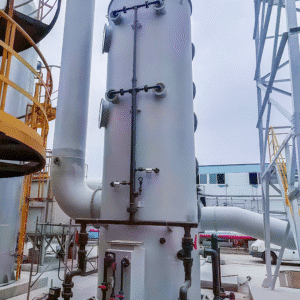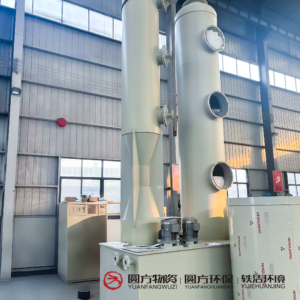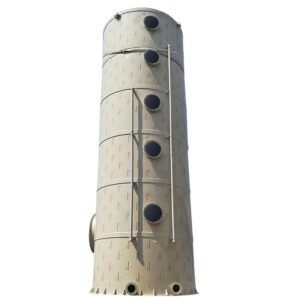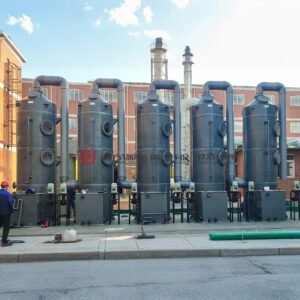
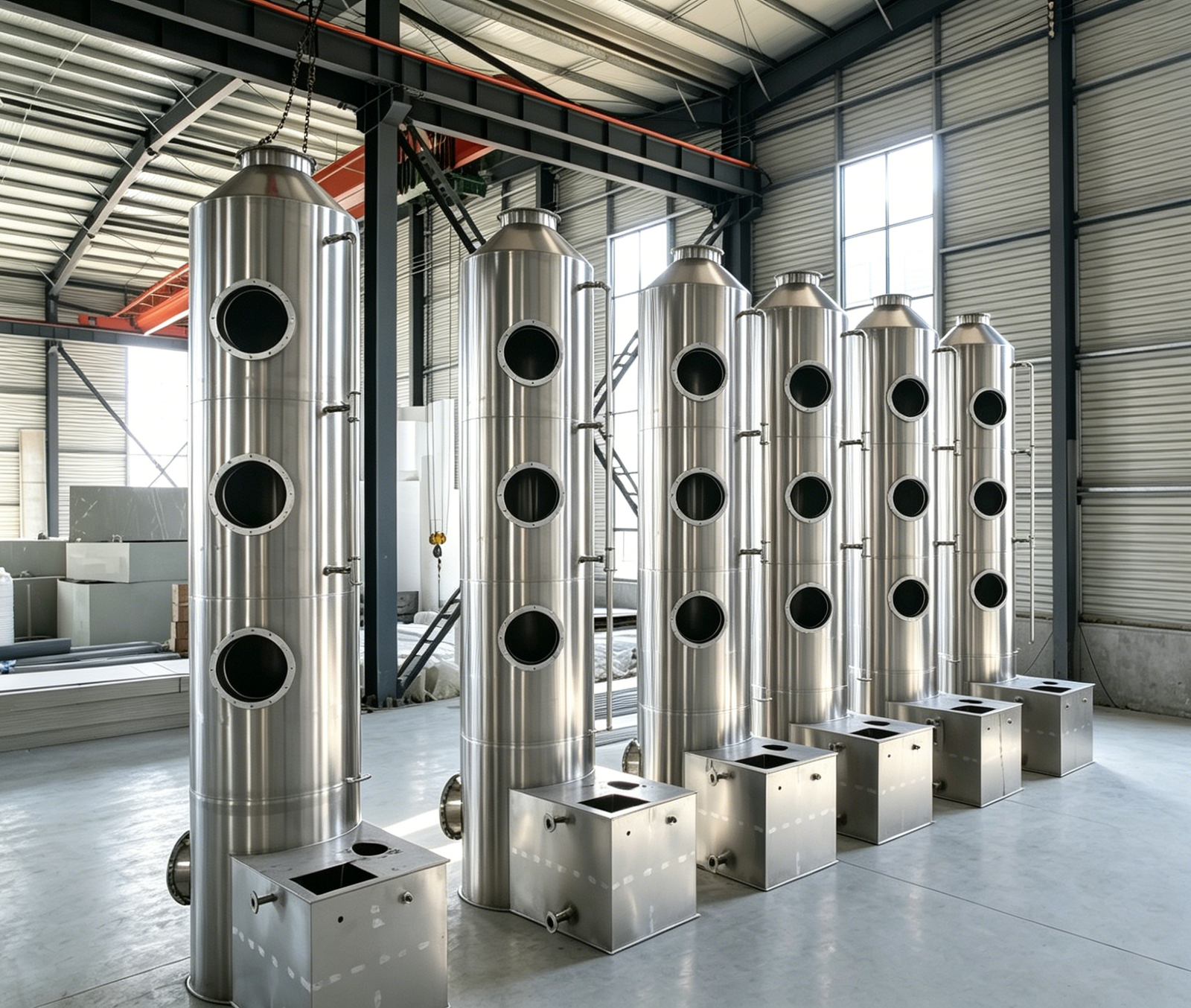
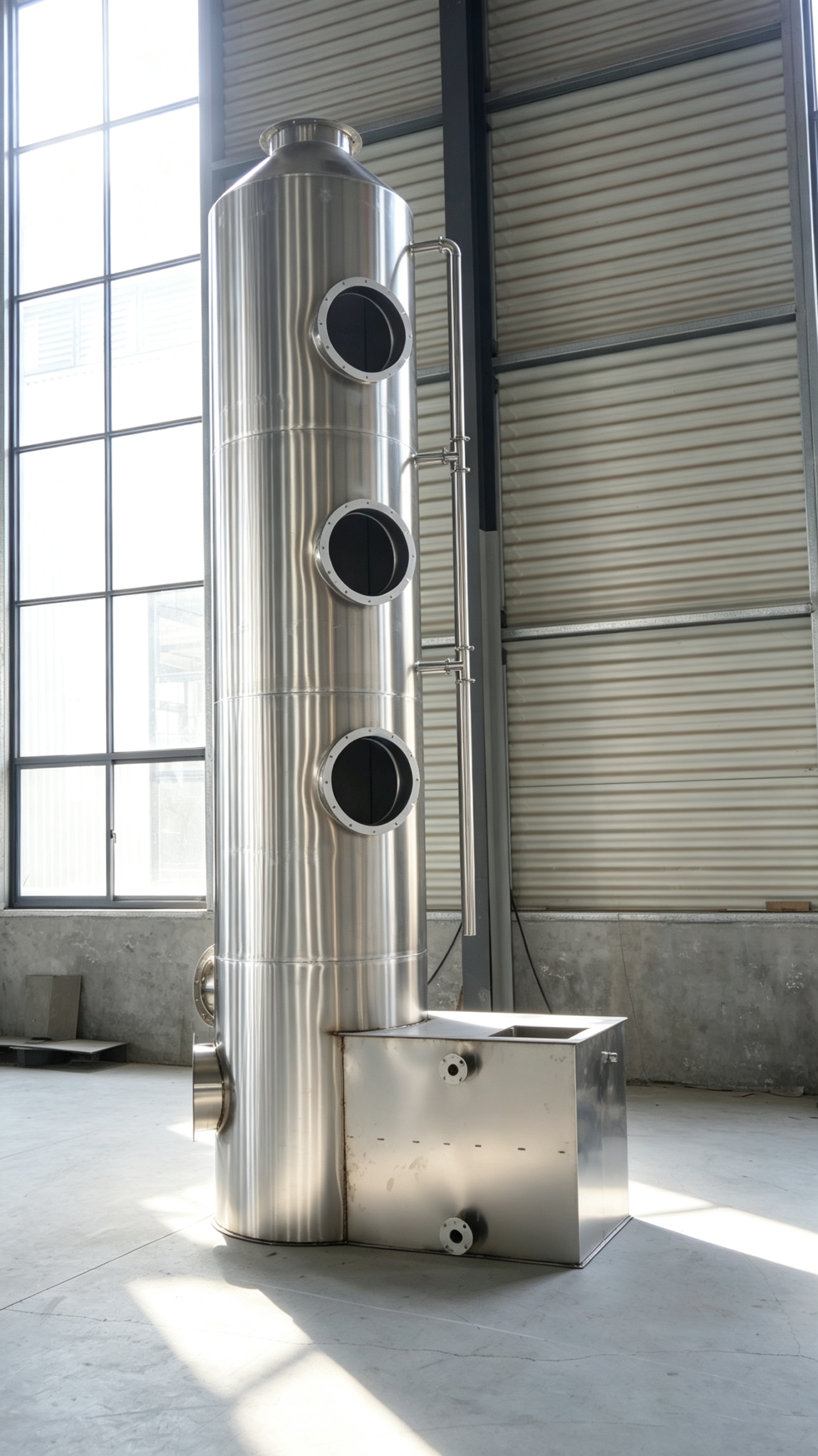
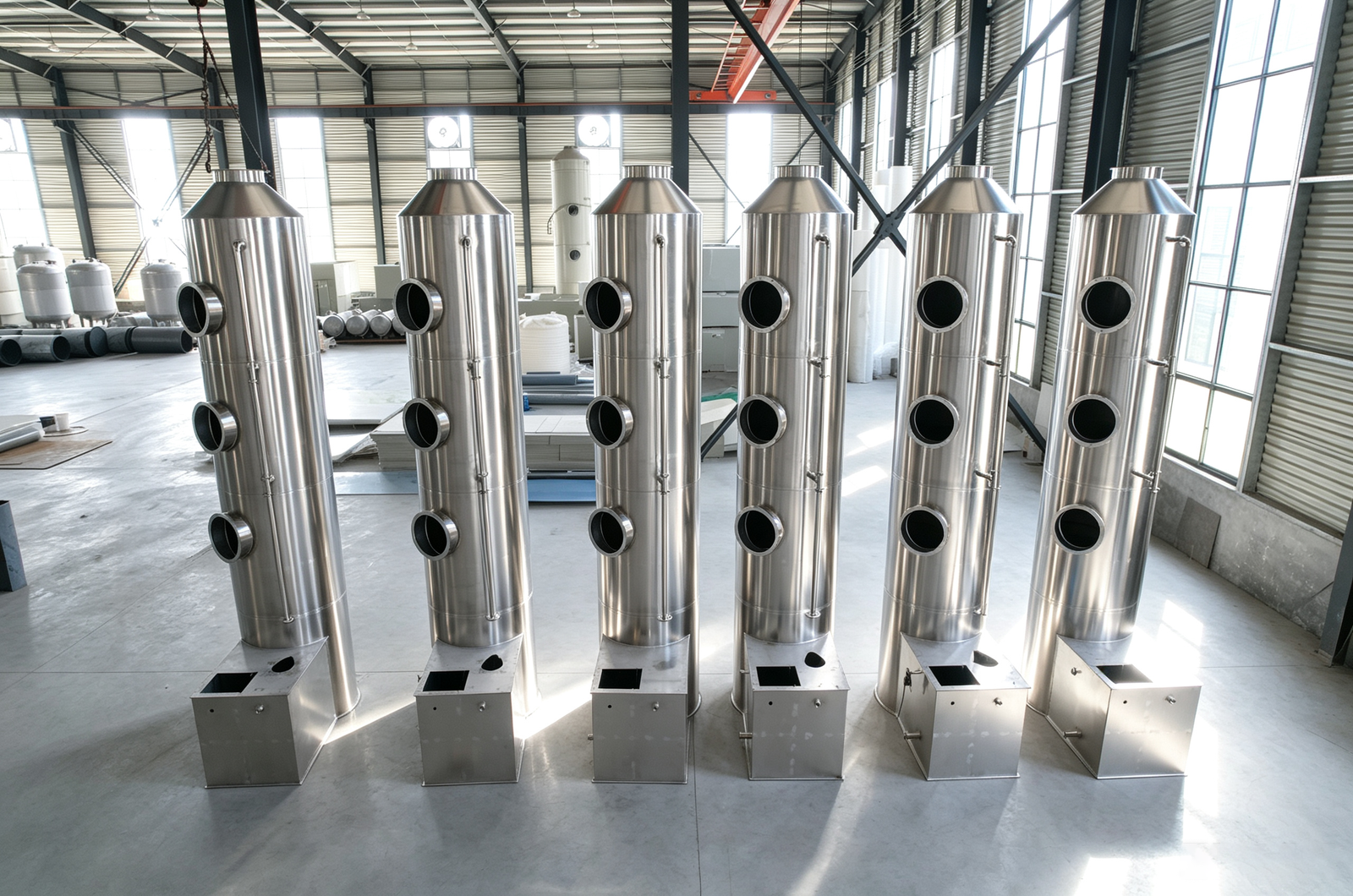
Stainless Steel Wet Scrubber — a packed-bed gas cleaning unit built from SS304 or SS316L for industrial exhaust that polypropylene (PP/PPH) units cannot handle: high-temperature streams, oxidizing fumes (chlorine, nitric acid), and sanitary vent lines in food, pharma, and lab service.
Contact-based scrubbing removes soluble gases, acid mist, and fine particulate. The rigid stainless shell tolerates thermal and mechanical load that plastic shells cannot.
For VOC-laden streams, this unit works as pre-treatment paired with downstream activated carbon adsorption.
What Is a Stainless Steel Wet Scrubber
A stainless steel wet scrubber is a packed-bed gas cleaning tower built from SS304 or SS316L instead of plastic. It pulls soluble gases, acid mist, and fine particulate out of industrial exhaust by washing the stream with a scrubbing liquid inside a stainless steel vessel. The metal shell lets the unit run where PP and PPH scrubbers fail — above their temperature limit, in oxidizing atmospheres, or wherever a cleanable, non-porous surface is required.
How the Scrubber Works
Contaminated gas enters the tower near the base and flows upward through a packed bed. A recirculating liquid is distributed across the packing from the top, creating a large wetted surface where pollutants transfer from the gas into the liquid. Cleaned gas passes through a mist eliminator and exits the top; the collected liquor drains to a sump or circulation tank for treatment or reuse.
Core process steps
- Gas in, upward through the packed bed
- Liquid scrub distributed from the top
- Pollutant transfers into the liquor
- Mist elimination, then clean gas out
- Liquor drains to sump / circulation tank
Why Stainless Steel Instead of PP / PPH
The two materials serve different jobs. PP/PPH is the right call for ambient-temperature acid and odor pre-treatment. Stainless steel is the right call when the stream or site demands more:
- Temperature: stainless handles exhaust well above the working range of PP/PPH shells.
- Oxidizing media: resists chlorine, bromine, and nitric-acid fumes that degrade plastics.
- Hygiene: smooth, cleanable, non-porous surface for food, beverage, pharma, and lab exhaust.
- Mechanical load: rigid body suits vacuum service and higher pressure differentials.
Material Selection: SS304 vs SS316L
Both grades are available. SS316L adds molybdenum for better resistance to chlorides and marine or coastal exposure; SS304 covers general indoor chemical exhaust. Final selection depends on the specific gas composition and local environment.
| Grade | Best for | Note |
|---|---|---|
| SS304 | General indoor chemical exhaust | Cost-effective default |
| SS316L | Chloride / marine / pharma service | Improved corrosion margin |
Typical Applications
- Chemical processing lines with hot or oxidizing fumes
- Food, beverage, and pharmaceutical plant vent streams
- Metal surface treatment and pickling exhaust
- Laboratory and pilot-plant exhaust
- Solvent-laden or high-temperature gas pre-treatment
Technical Specifications
Dimensions and duty are engineered per project. Typical configurable ranges:
| Parameter | Range / Option |
|---|---|
| Shell material | SS304 / SS316L |
| Tower diameter | [ Customizable mm or inch ] |
| Gas flow rate | [ Customizable m³/h ] |
| Operating temperature | [ Customizable °C ] |
| Packing type | [ Customizable ] |
| Liquid circulation | [ Customizable ] |
VOC Treatment Note
For VOC-bearing streams, wet scrubbing generally works as a pre-treatment or co-treatment step rather than a standalone solution. Pair it with an activated carbon adsorption box downstream for full treatment.
Related Equipment
- PP/PPH Packed Bed Wet Scrubber — for ambient acid/odor pre-treatment
- Activated Carbon Adsorption Box — downstream VOC polishing
- Falling Film Absorber — recoverable acid gas absorption
FAQ
Q: Can a stainless steel scrubber handle high-temperature exhaust?
A: Yes. Stainless construction extends the operating range well beyond PP/PPH limits. Confirm the exact temperature with our engineering team.
Q: SS304 or SS316L?
A: SS316L for chloride- or marine-exposed service; SS304 for general indoor chemical exhaust.
Q: Is it enough for VOC compliance on its own?
A: Usually as pre-treatment. Combine with carbon adsorption for complete treatment.