
- Understanding HF Acid Mist Challenges in Semiconductor Fabs
- Sources of HF Emissions
- Regulatory Landscape
- Packed Tower Scrubber Technology for HF Removal
- Chemical Absorption Mechanism
- Why Packed Towers Excel for HF
- Design Parameters for HF Packed Tower Scrubbers
- Key Dimensioning Parameters
- Materials of Construction
- Sizing Example: 20,000 m³/h Exhaust Stream
- System Integration and Auxiliary Equipment
- Chemical Dosing and pH Control
- Mist Elimination
- Wastewater Treatment Integration
- Operational Best Practices
- Routine Monitoring
- Common Issues and Troubleshooting
- Case Study: 300 mm Fab HF Scrubber Retrofit
- Emerging Trends and Future Considerations
- Conclusion
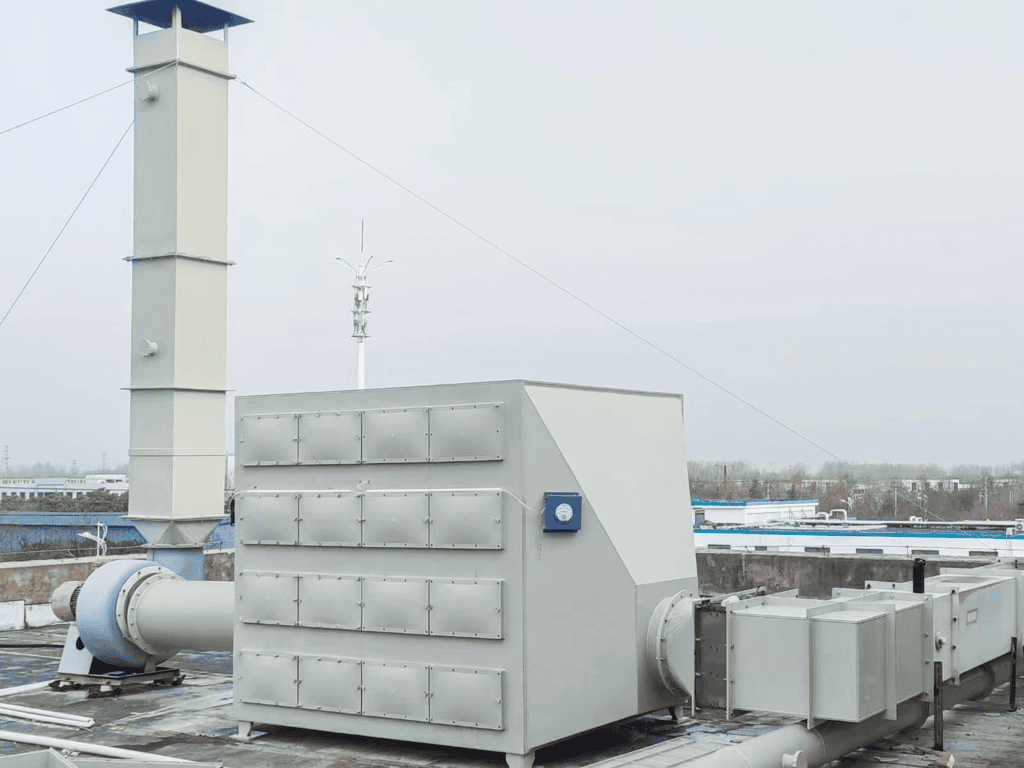
Hydrofluoric acid (HF) is one of the most hazardous airborne contaminants generated in semiconductor manufacturing. Used extensively in wafer etching, quartz cleaning, and chemical vapor deposition chamber maintenance, HF produces highly corrosive and toxic acid mist that presents both occupational health risks and stringent regulatory compliance challenges. As global semiconductor fabrication capacity expands—particularly across East Asia, Europe, and North America—the need for a robust, efficient HF acid mist scrubber has never been greater.
This engineering guide provides a detailed technical deep dive into HF acid mist scrubber design using packed tower technology in semiconductor fabs. We cover chemical scrubbing mechanisms, packed column design parameters, material selection for corrosion resistance, integration with fab exhaust systems, and operational best practices to ensure continuous regulatory compliance.
Understanding HF Acid Mist Challenges in Semiconductor Fabs
Sources of HF Emissions
In a typical semiconductor fabrication facility, HF is employed in multiple process steps:
- Wet etching: Buffered oxide etch (BOE) and dilute HF solutions remove silicon dioxide layers from wafers.
- Quartz cleaning: HF-based cleaning solutions remove residues from quartz furnace tubes and process chambers.
- CVD chamber cleaning: HF or fluorine-based precursors are used for in-situ cleaning of deposition chambers.
- Wafer reclaim: Post-processing wafer stripping and reconditioning involve HF-containing chemistries.
These operations generate HF concentrations ranging from 5 to 500 mg/m³ in exhaust streams, depending on the process tool, chemical bath temperature, and local exhaust ventilation design. HF is unique among acid gases because of its small molecular size, high reactivity with silica-based materials, and extreme toxicity—the OSHA permissible exposure limit (PEL) is just 3 ppm (2.5 mg/m³) as an 8-hour time-weighted average.
Regulatory Landscape
Semiconductor facilities worldwide face tightening emission standards for HF and other acid gases:
- United States: EPA National Emission Standards for Hazardous Air Pollutants (NESHAP) for semiconductor manufacturing (40 CFR Part 63, Subpart BBBBB) set emission limits for HF and other process gases.
- European Union: Industrial Emissions Directive (IED 2010/75/EU) and BREF notes for waste gas treatment require best available techniques (BAT) for acid gas control.
- China: GB 31573-2015 emission standard for inorganic chemical industry pollutants now applies to semiconductor facilities, with HF emission limits as low as 5 mg/m³ in some provinces.
- South Korea & Taiwan: Local environmental agencies enforce HF emission limits at 1-3 ppm for new fabs, reflecting the dense concentration of semiconductor manufacturing in these regions.
Meeting these standards requires removal efficiencies exceeding 99% for HF in many cases—a level achievable only with properly designed packed tower scrubbers.
Packed Tower Scrubber Technology for HF Removal
Chemical Absorption Mechanism
A packed tower wet scrubber operates on the principle of gas-liquid countercurrent absorption. HF-laden exhaust gas enters at the bottom of the tower and flows upward through a packed bed. Simultaneously, a scrubbing liquid—typically an alkaline solution—is distributed from the top and flows downward, wetting the packing surface. The mass transfer of HF from the gas phase to the liquid phase occurs across the gas-liquid interface on the wetted packing surface.
The primary chemical reactions in an alkaline scrubbing system are:
Stage 1 – Absorption:
HF(g) → HF(aq)
Stage 2 – Neutralization (using NaOH):
HF(aq) + NaOH(aq) → NaF(aq) + H₂O
Overall reaction:
HF(g) + NaOH(aq) → NaF(aq) + H₂O
The neutralization step is critical because it maintains the driving force for mass transfer. Without alkali, the scrubbing liquid would rapidly become saturated with dissolved HF, and the partial pressure driving force would diminish to zero. The equilibrium between gas-phase HF and aqueous fluoride species is strongly pH-dependent; maintaining a scrubbing liquid pH above 8 ensures that more than 99.9% of absorbed HF remains in the liquid phase as non-volatile fluoride salts.
Why Packed Towers Excel for HF
Compared to alternative scrubber designs, a purpose-built HF acid mist scrubber using packed towers offers distinct advantages:
- High mass transfer efficiency: Structured or random packing provides 150–250 m²/m³ of interfacial area, enabling compact designs with removal efficiencies exceeding 99.5%.
- Low pressure drop: Typical pressure drops of 100–400 Pa/m allow integration with existing fab exhaust systems without requiring booster fans.
- Scalability: Packed towers can handle exhaust flow rates from 500 to over 100,000 m³/h, making them suitable for single-tool point-of-use abatement up to central fab-wide systems.
- Corrosion resistance flexibility: The shell and packing materials can be selected independently to optimize both chemical compatibility and cost.
- Low liquid holdup: Unlike tray towers, packed columns have minimal liquid inventory, reducing the hazard in case of runaway exothermic reactions.
Design Parameters for HF Packed Tower Scrubbers
Key Dimensioning Parameters
Proper packed tower design for HF removal requires careful specification of the following parameters:
| Parameter | Typical Range for HF | Notes |
|---|---|---|
| Superficial Gas Velocity | 1.0–1.8 m/s | Lower velocities for high-efficiency structured packing; stay below 70% of flooding velocity |
| Liquid-to-Gas Ratio (L/G) | 2.0–5.0 L/m³ | Higher ratios for high inlet concentrations or tighter emission limits |
| Packing Height | 2.0–4.5 m | Determined by required number of transfer units (NTU); HF typically requires 4–8 NTU |
| Packing Type | Structured (250Y) or Random (2″ Pall rings) | PP or PVDF materials preferred for HF service |
| Recirculation pH | 8.0–10.0 | Automatic caustic dosing with pH controller; blowdown at conductivity threshold |
| Mist Eliminator | Mesh or chevron type | Essential to prevent alkaline mist carryover; 99% removal for droplets >5 µm |
Materials of Construction
Material selection is arguably the most critical design decision for HF scrubbers. HF attacks silica-based materials (glass, ceramics), many stainless steel grades, and some engineering plastics. Recommended materials include:
- Polypropylene (PP): Excellent resistance to HF at concentrations up to 60% and temperatures below 80°C. Cost-effective for shell, packing, and internals. Widely used in semiconductor fabs.
- PVDF (Polyvinylidene fluoride): Superior chemical resistance at elevated temperatures (up to 120°C). Suitable for high-concentration HF streams and where mechanical strength is critical.
- FRP (Fiber-Reinforced Plastic) with corrosion barrier: Suitable for large-diameter towers where PP lacks structural rigidity. Requires a vinylester or epoxy corrosion barrier rated for HF.
- Hastelloy C-276: For critical components exposed to mixed acids (HF + HNO₃) or elevated temperatures where plastics may degrade.
Avoid: Glass, ceramic, and silica-containing materials will be rapidly etched by HF. 304/316 stainless steel suffers severe pitting and stress corrosion cracking in HF environments. Carbon steel is completely unsuitable.
Sizing Example: 20,000 m³/h Exhaust Stream
Consider a typical semiconductor fab central exhaust system handling 20,000 m³/h with an inlet HF concentration of 50 mg/m³. The target outlet concentration is 1 mg/m³ (98% removal).
Step 1 – Tower Diameter: At a superficial gas velocity of 1.5 m/s, the required cross-sectional area is:
Area = 20,000 / (3600 × 1.5) = 3.7 m² → Diameter = 2.17 m → Select 2.2 m diameter.
Step 2 – Packing Height: For PP structured packing (250Y) with an HETP (Height Equivalent to a Theoretical Plate) of approximately 0.45 m, and requiring 6 theoretical stages for 98% removal:
Packing height = 6 × 0.45 = 2.7 m. Add 20% safety margin → 3.2 m total packed height.
Step 3 – Liquid Recirculation Rate: At L/G = 3 L/m³, the required flow is:
3 L/m³ × 20,000 m³/h = 60,000 L/h = 60 m³/h.
Step 4 – Caustic Consumption: Stoichiometric NaOH requirement for 50 mg/m³ HF:
HF mass flow = 20,000 × 50 × 10⁻⁶ = 1.0 kg/h
NaOH required = 1.0 × (40/20) = 2.0 kg/h (as 100% NaOH)
With 50% excess for pH control: ~3.0 kg/h of 100% NaOH equivalent.
System Integration and Auxiliary Equipment
Chemical Dosing and pH Control
Precise pH control is essential for consistent HF removal. A typical system includes:
- pH probe: Installed in the recirculation tank or pump discharge line. Dual-probe configuration with automatic cleaning recommended due to fluoride scaling potential.
- PID controller: Modulates the caustic dosing pump based on pH setpoint (typically 8.5–9.0).
- Conductivity meter: Monitors dissolved solids buildup; triggers automatic blowdown when conductivity exceeds the setpoint (typically 50–80 mS/cm).
- Blowdown system: Discharges a portion of recirculation liquid to the facility wastewater treatment system. The blowdown stream contains NaF and must be treated for fluoride removal before discharge.
Mist Elimination
High-efficiency mist elimination is mandatory downstream of the packed bed. Without it, alkaline mist carryover can cause:
- Corrosion of downstream ductwork and exhaust fans
- White plume formation at the stack outlet
- Elevated particulate emissions that may exceed PM limits
- Deposition of sodium fluoride solids on fan blades, causing imbalance and vibration
Two-stage mist elimination is recommended for critical applications: a mesh pad demister for bulk liquid removal (droplets >10 µm) followed by a chevron or vane-type high-efficiency separator for fine mist (<10 µm).
Wastewater Treatment Integration
The blowdown stream from the scrubber contains dissolved NaF at concentrations of 500–2,000 mg/L fluoride. Most semiconductor fabs operate centralized fluoride wastewater treatment systems using calcium precipitation:
2NaF(aq) + Ca(OH)₂(aq) → CaF₂(s) + 2NaOH(aq)
The scrubber design should coordinate with the fab’s wastewater treatment capacity to ensure the blowdown flow rate and fluoride load are compatible with existing treatment infrastructure.
Operational Best Practices
Routine Monitoring
- Daily: Check recirculation pH and conductivity; verify caustic dosing pump operation and day tank levels.
- Weekly: Inspect mist eliminator for scaling; check packing bed pressure drop trend (a rising trend indicates fouling or scaling).
- Monthly: Collect recirculation liquid sample for fluoride and TDS analysis; calibrate pH probes; inspect spray nozzle pattern.
- Quarterly: Remove and inspect a packing sample for scaling, degradation, or channeling; clean or replace as needed.
- Annually: Full internal inspection of tower shell, internals, and packing; thickness testing of FRP or PP shell for degradation; replace mist eliminator elements.
Common Issues and Troubleshooting
Issue 1: Gradual Increase in Outlet HF Concentration
Possible causes: pH probe drift (actual pH too low), packing fouling reducing mass transfer area, liquid distributor blockage causing maldistribution.
Actions: Calibrate pH probe; increase blowdown rate to reduce scaling potential; inspect spray nozzles with borescope; if packing is fouled, perform chemical cleaning with dilute HCl (for carbonate scale) or mechanical cleaning.
Issue 2: High Pressure Drop Across Packed Bed
Possible causes: Packing scaling from fluoride salts or calcium deposits, plastic packing deformation from high-temperature excursions, excessive gas velocity.
Actions: Increase blowdown to reduce dissolved solids; verify gas flow rate against design; if packing is scaled, perform offline cleaning; if packing is deformed, replace the affected section.
Issue 3: Caustic Overconsumption
Possible causes: Inlet HF concentration higher than design basis, pH setpoint too high, caustic wastage from CO₂ absorption from ambient air.
Actions: Verify inlet HF concentration with stack testing; reduce pH setpoint to 8.0–8.5 if emission limits allow; consider covering the recirculation tank to minimize atmospheric CO₂ absorption.
Case Study: 300 mm Fab HF Scrubber Retrofit
A semiconductor foundry in Southeast Asia operating a 300 mm wafer fab was experiencing HF emission excursions during peak production periods. The existing single-stage packed tower (1.8 m diameter, 2.0 m packing height, random packing) was achieving only 90–95% removal efficiency, resulting in stack HF concentrations of 5–8 mg/m³ against a local regulatory limit of 2 mg/m³.
Root cause analysis revealed:
- Liquid maldistribution due to partially clogged spray nozzles (fluoride salt scaling)
- Channeling through the random packing bed due to uneven initial packing installation
- Insufficient packing height—the existing 2.0 m bed provided only 4 theoretical stages, inadequate for the required 99% removal
- pH control instability due to a single-point pH probe with manual calibration schedule
Retrofit solution:
- Replaced random packing with PP structured packing (250Y), increasing both mass transfer efficiency and capacity
- Extended packed bed height to 3.5 m in a new 2.2 m diameter tower shell
- Installed a dual-nozzle liquid distributor with strainer-protected spray nozzles
- Upgraded to dual pH probes with automatic temperature compensation and weekly auto-calibration
- Added conductivity-controlled automatic blowdown to maintain TDS below 50,000 mg/L
Results after 12 months of operation:
- Outlet HF concentration: consistently <0.5 mg/m³ (99.5%+ removal efficiency)
- Pressure drop: reduced from 450 Pa to 280 Pa despite increased packing height (due to structured packing’s lower resistance)
- Caustic consumption: reduced by 22% through improved pH control
- Unplanned downtime: zero events in 12 months (versus 4 events in the previous year)
Emerging Trends and Future Considerations
Several technology trends are influencing HF scrubber design for next-generation semiconductor fabs:
- Point-of-use (POU) abatement: Compact packed scrubbers integrated directly with individual process tools reduce ductwork corrosion risk and enable process-specific scrubbing chemistry optimization.
- Advanced process control: Machine learning algorithms that predict caustic demand based on process tool activity and exhaust flow rates, enabling proactive rather than reactive pH control.
- Water recycling: Closed-loop scrubber systems with membrane-based fluoride removal, reducing DI water consumption and eliminating liquid waste discharge.
- Low-GWP scrubbing media: Alternatives to traditional NaOH scrubbing, including regenerative amine-based absorbents that can be thermally regenerated, reducing chemical consumption and waste generation.
Conclusion
Effective HF acid mist control in semiconductor fabrication requires a systematic engineering approach spanning process chemistry, mass transfer fundamentals, materials science, and operational discipline. Packed tower scrubbers, when properly designed with structured packing, precise pH control, and appropriate materials of construction, reliably achieve the 99%+ removal efficiencies demanded by modern emission standards.
Key takeaways for engineering teams:
- Size packed towers conservatively—use an adequate safety margin on packing height and diameter to accommodate production uprates and process variability.
- Invest in materials: PP or PVDF construction may carry a higher upfront cost than FRP, but the lifecycle cost advantage through reduced maintenance and longer service life is substantial.
- Automate pH control and blowdown: manual intervention cannot match the consistency of a well-tuned PID loop with online instrumentation.
- Integrate scrubber design with facility wastewater treatment capacity from the outset to avoid downstream bottlenecks.
- Establish a structured preventive maintenance program with defined inspection intervals, spare parts inventory, and condition-based replacement triggers.
As semiconductor manufacturing continues its relentless push toward smaller nodes and higher throughput, the demands on exhaust treatment systems will only intensify. A well-designed packed tower scrubber is not merely a compliance requirement—it is a critical enabling technology for sustainable, high-volume semiconductor production.
For inquiries, contact Yfep@yf-ep.com | www.xxyuanfang.cn