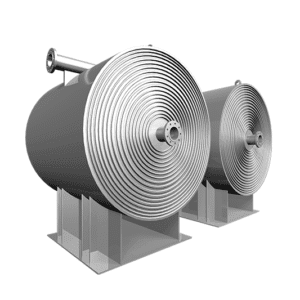
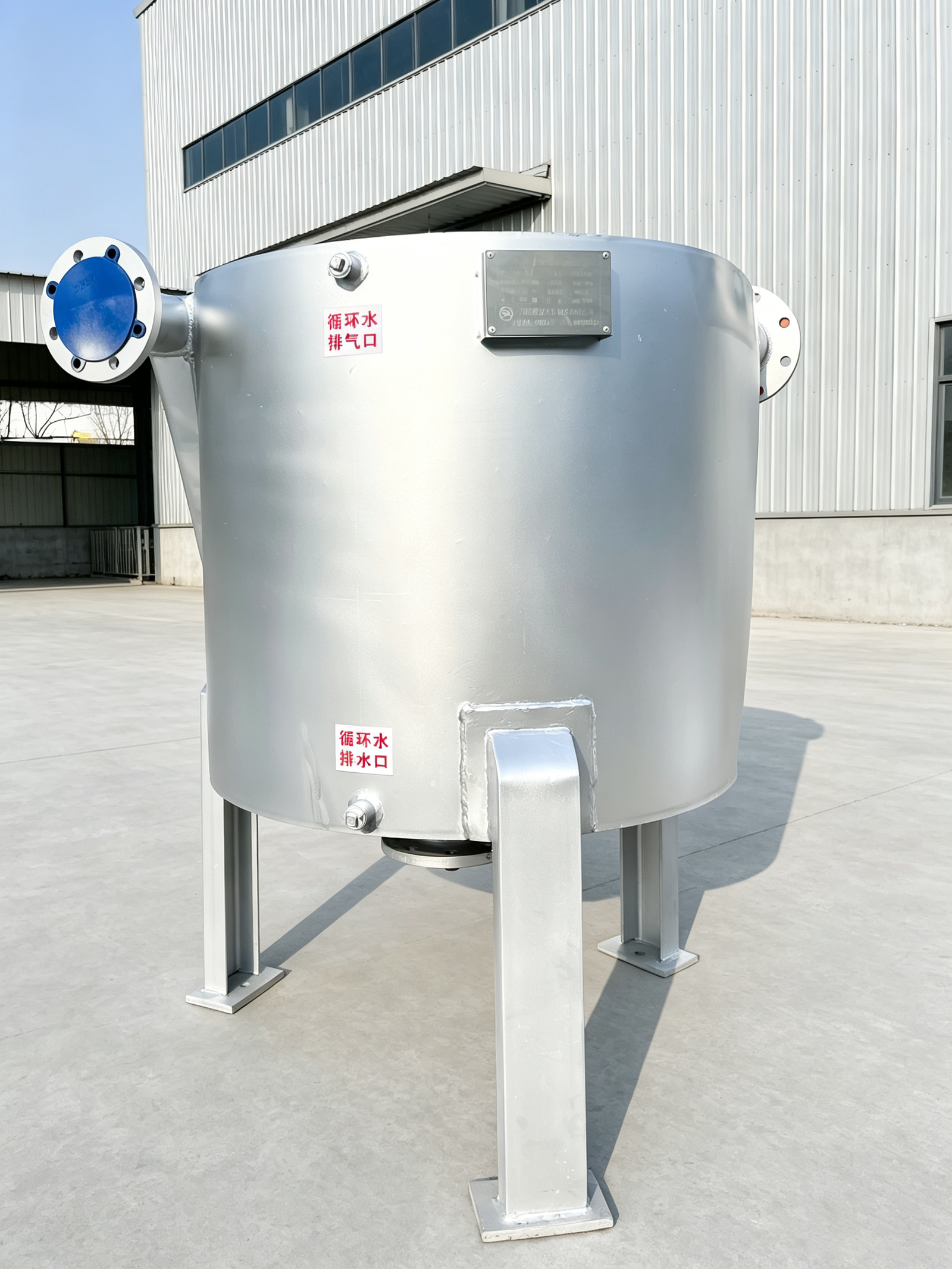
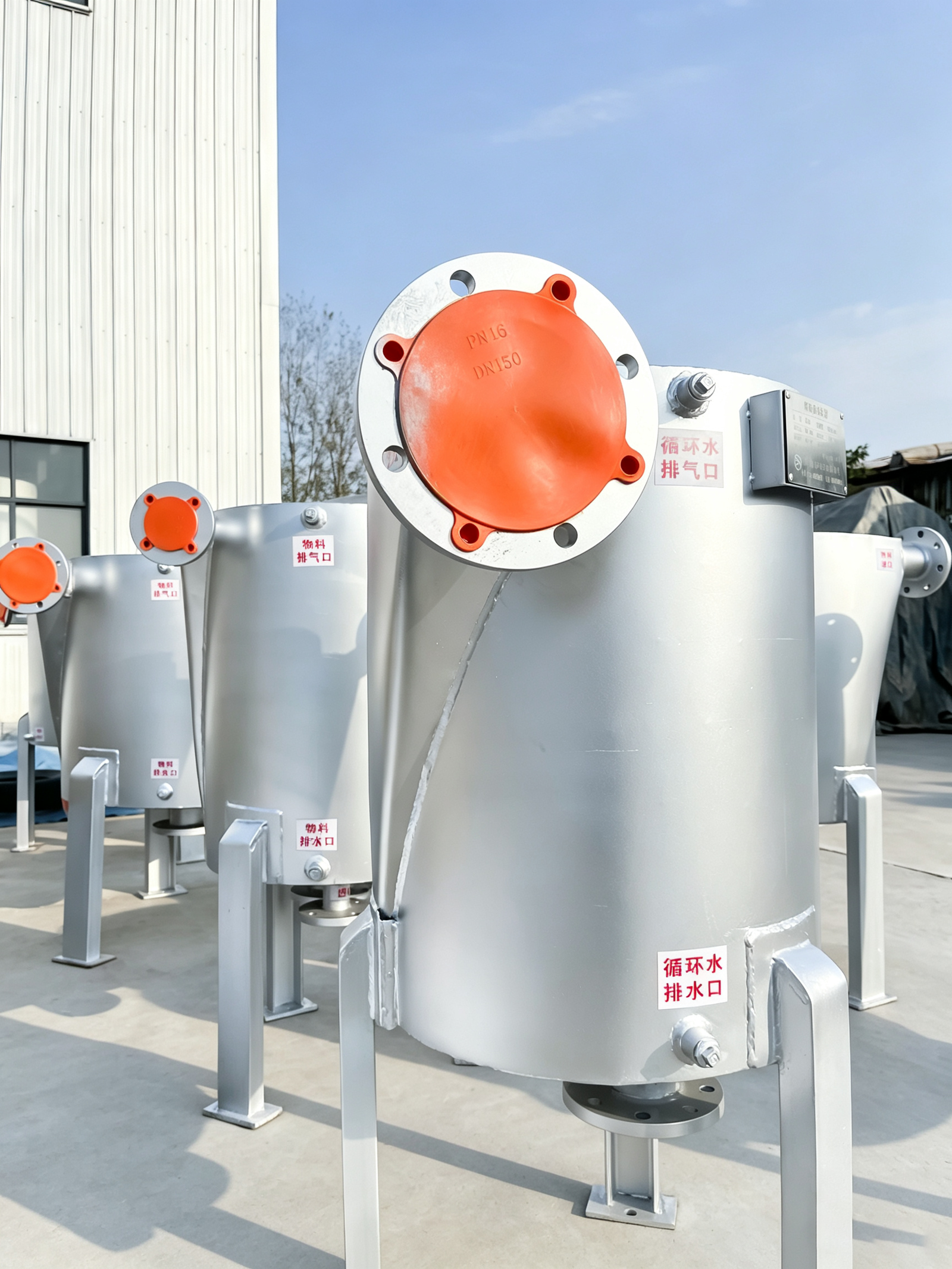
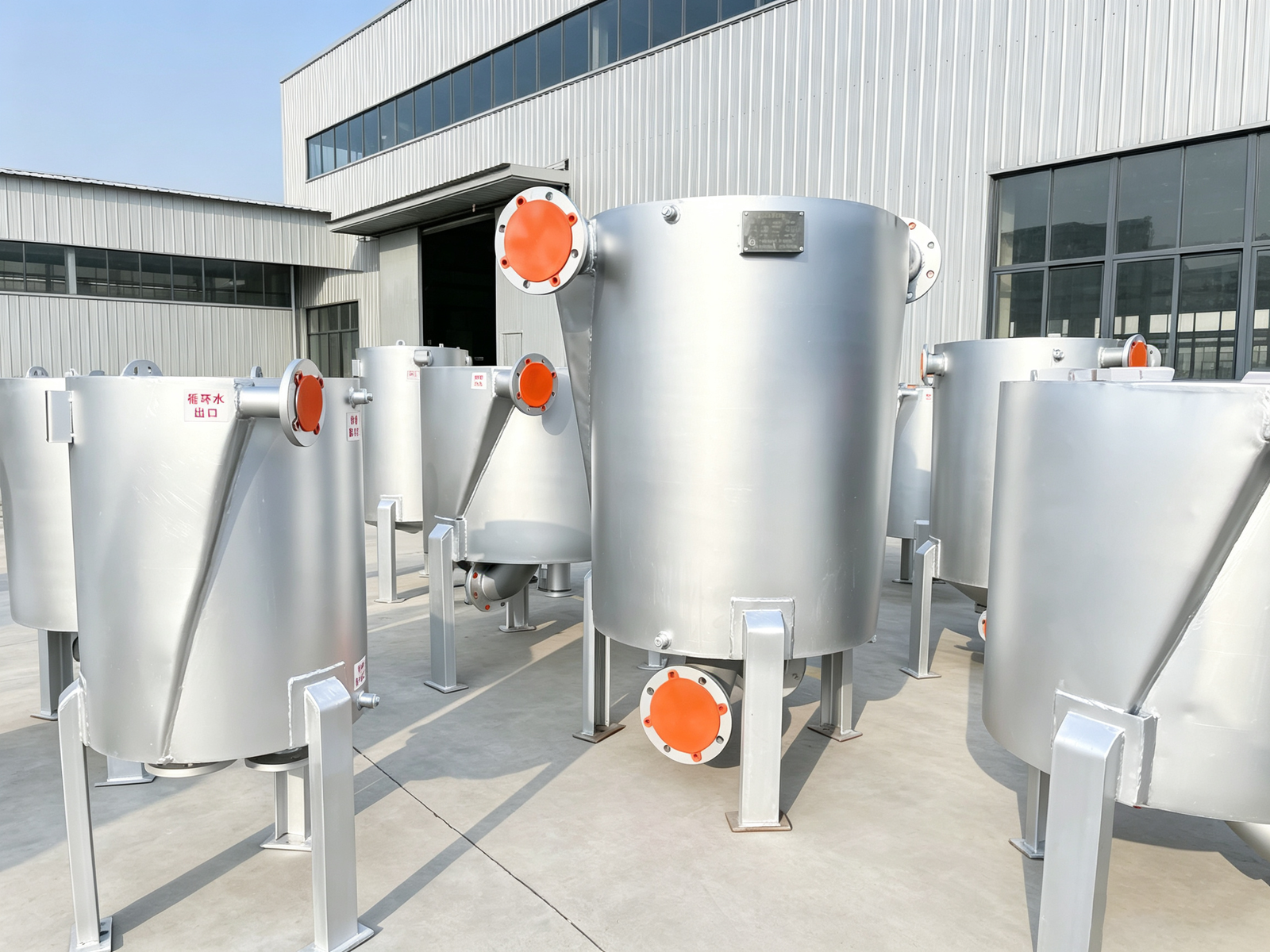
The spiral plate heat exchanger uses two concentric spiral channels for true counter-current heat transfer. Its single uninterrupted flow path handles high-viscosity liquids, slurries and fouling-prone streams that clog shell-and-tube units.
Spiral Plate Heat Exchanger
A spiral plate heat exchanger consists of two long metal plates wound into a pair of concentric spiral channels, separated by a centre partition. Each fluid travels one continuous spiral path in true counter-current flow. With no U-bends or tight tube bundles, the open channel resists blockage and is easy to clean mechanically — making it the preferred choice for viscous, slurry and fouling-prone duties where shell-and-tube exchangers struggle.
How It Works
Hot and cold media enter at opposite ends and flow through separate spiral channels. The long, single-pass path gives a very small temperature approach (high heat recovery) and uniform velocity that keeps solids in suspension. End covers can be configured for counter-flow, co-current flow, or one channel open to atmosphere (condensation / evaporation service).
Why Choose a Spiral Plate Exchanger
- Fouling-resistant: open channel and high turbulence delay deposit build-up on viscous and particle-laden streams.
- Small temperature approach: true counter-current flow recovers more heat — ideal for waste-heat recovery.
- Easy cleaning: channels can be rodded or hydro-blasted in place; some designs allow full access to both surfaces.
- Compact footprint: high surface area per volume versus conventional shell-and-tube units.
- Low leakage risk: a single welded spiral path means fewer joints between the two fluids.
Materials & Construction
Typically fabricated from SS304 / SS316L stainless steel, with carbon-steel options for non-corrosive duties. Plate thickness, channel spacing and centre distance are selected per your media, pressure and temperature. For strongly acidic or chloride-rich services, select by chemistry: PP/PPH for non-oxidizing acids (e.g. HCl, dilute H₂SO₄); stainless steel for oxidizing acids (nitric, chromic); and silicon carbide where corrosion is extreme.
Typical Applications
- Chemical and petrochemical process cooling / heating
- Food, beverage and pharmaceutical duties (cleanable, hygienic options)
- Waste-water and effluent heat recovery
- High-viscosity oils, resins and slurry streams
- Pre-heat / pre-cool before falling film absorbers or scrubber recirculation loops
Where Spiral Plate Fits (vs our other exchangers)
| Exchanger type | Best for |
|---|---|
| Spiral plate (this page) | High-viscosity, fouling-prone, slurry, small ΔT heat recovery |
| Stainless steel shell & tube | Oxidizing media (nitric, chromic), medium-high temp, sanitary cleanable |
| PP/PPH shell & tube | Non-oxidizing acids/alkalis, low-to-medium temp, light & low cost |
| Silicon carbide | Extreme corrosion + high temperature where metals fail |
Customization
Every unit is custom-engineered to your duty: heat-transfer area, channel spacing, design pressure and temperature, and end-cover configuration are selected per your process data. Share your flow rates, temperatures and fluid properties and we size the exchanger accordingly.