
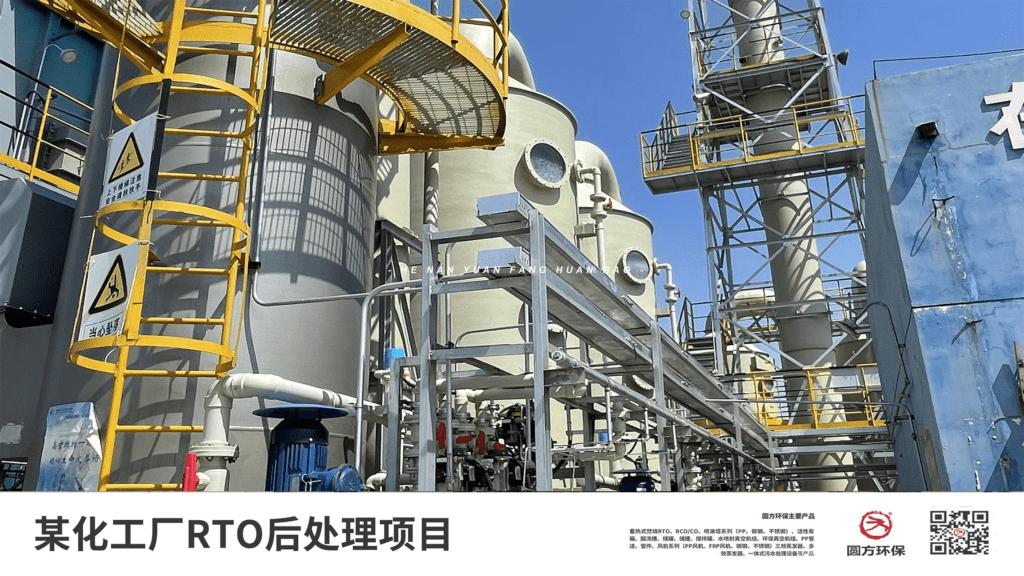
- How Spray Towers Work: The Gas-Liquid Contact Principle
- Spray Tower Types and Material Selection
- Key Equipment Configurations
- Material Selection for Corrosion Resistance
- Critical Design Parameters: Getting the Numbers Right
- Liquid-to-Gas Ratio (L/G)
- Tower Diameter and Superficial Gas Velocity
- Residence Time and Tower Height
- Nozzle Selection and Spray Coverage
- Engineering Case Study: Chemical Plant HCl Scrubber Upgrade
- Operation and Maintenance Best Practices
- Daily Monitoring
- Weekly Checks
- Quarterly Preventive Maintenance
- Annual Shutdown Inspection
- Common Pitfalls to Avoid
- Conclusion
Spray towers (also known as spray scrubbers or spray absorption towers) are the workhorse of chemical industry acid waste gas treatment systems. If you operate a chemical processing plant that generates acidic exhaust streams — hydrochloric acid mist, sulfuric acid fumes, nitric oxide, or mixed acid gases — selecting the right spray tower is not just a compliance requirement; it’s a capital investment that determines your operational reliability for the next decade.
This article provides a comprehensive engineering guide to spray tower selection, covering the critical design parameters, material choices, and process configurations that separate a properly sized system from one that will underperform and require costly retrofits within months of commissioning.
How Spray Towers Work: The Gas-Liquid Contact Principle
At its core, a spray tower operates on a deceptively simple principle: counter-current gas-liquid mass transfer. The acidic exhaust gas enters from the bottom or side of the vertical tower and flows upward, while a scrubbing liquid (typically water, alkaline solution, or chemical reagent) is atomized into fine droplets and sprayed downward from multiple nozzle tiers.
The pollutant transfer mechanism involves three sequential steps:
- Gas-phase diffusion: Acidic gas molecules (HCl, SO2, HF, H2S) diffuse from the bulk gas stream to the liquid droplet surface
- Liquid-phase absorption: The acid gas dissolves into the scrubbing liquid, where it either remains dissolved or undergoes a neutralization reaction with alkaline reagents such as NaOH or Ca(OH)2
- Droplet separation: A mist eliminator at the top of the tower captures entrained liquid droplets before the cleaned gas exits to the stack
The efficiency of this process is governed primarily by the liquid-to-gas ratio (L/G), the total contact surface area (determined by droplet size distribution and nozzle arrangement), and the residence time of the gas within the tower.
Spray Tower Types and Material Selection
Key Equipment Configurations
Modern spray towers come in several standard configurations, each suited to specific application scenarios:
- Single-stage counter-current spray tower: The most common configuration for moderate acid loads. One or two spray levels with a single scrubbing liquid circuit. Suitable for HCl, HF, and moderate-concentration acid mist removal with removal efficiencies of 90–95%
- Multi-stage spray tower: Two to three independent spray levels, each with its own circulation pump and sump. This configuration allows staged absorption — the upper stage uses fresh water for final polishing, while the lower stage recirculates partially spent liquid. Achieves removal efficiencies above 98% for high-load applications
- Packed-bed spray tower: Combines spray nozzles with a structured or random packing section. The packing provides additional surface area and promotes liquid film formation, enhancing mass transfer. Ideal for low-solubility gases such as NOx or H2S where longer gas-liquid contact time is required
- Venturi-spray hybrid: A high-velocity venturi section followed by a spray absorption zone. Designed for applications involving both acid gases and fine particulate matter (sub-micron mist), such as sulfuric acid production or phosphate fertilizer plants
Material Selection for Corrosion Resistance
Material compatibility is arguably the most critical design decision for acid gas service. The wrong material choice leads to premature failure — sometimes within 6–12 months. The following materials are commonly specified:
- PP (Polypropylene): Excellent resistance to HCl, HF, H2SO4 (dilute), and most organic acids. Temperature limit approximately 80°C continuously, 100°C intermittent. Cost-effective and widely available. Suitable for the majority of chemical industry acid gas applications
- PPH (Polypropylene Homopolymer): Higher mechanical strength and better creep resistance than standard PP. Preferred for larger-diameter towers (>2 m) or elevated-temperature service. Welding quality is noticeably better than copolymer PP
- FRP (Fiberglass-Reinforced Plastic): Superior structural strength and temperature resistance (up to 120°C with vinyl ester resin). The go-to material for large towers (>3 m diameter), outdoor installations with wind load considerations, and applications involving organic solvents that would attack polypropylene
- PVC (Polyvinyl Chloride): Good resistance to oxidizing acids (nitric, chromic). Lower temperature limit (~60°C) and lower mechanical strength. Typically used for smaller units or internal components rather than full tower shells
- 316L Stainless Steel: Used only for specific scenarios where organic solvents or high temperatures preclude polymer materials. Requires careful evaluation of chloride content and pH to avoid pitting corrosion
The general rule of thumb: PP is sufficient for 80% of chemical acid gas applications. Upgrade to PPH for large-diameter towers, FRP for high-temperature or structurally demanding installations, and stainless steel only when specifically justified.
Critical Design Parameters: Getting the Numbers Right
Liquid-to-Gas Ratio (L/G)
The L/G ratio is the single most influential parameter affecting removal efficiency. It represents the volumetric flow rate of scrubbing liquid per unit volume of gas treated, typically expressed in L/m³:
- 1.0–2.0 L/m³: Light-duty polishing. Suitable for already-low acid concentrations (<50 mg/m³) requiring final cleanup to meet emission limits
- 2.0–4.0 L/m³: Standard industrial range. Appropriate for HCl concentrations up to 200 mg/m³, typical of pickling lines, chemical reactor vents, and storage tank exhaust
- 4.0–6.0 L/m³: High-load applications. Required for acid gas concentrations exceeding 200 mg/m³, multi-component acid mixtures, or where >95% removal efficiency must be guaranteed
- 6.0–8.0 L/m³: Extreme service. Reserved for concentrated acid fumes, emergency scrubber duty, or applications with regulatory removal requirements exceeding 98%
Warning: Going below the recommended L/G to save on pump power is the most common cause of underperforming spray towers. A 1.5 L/m³ tower simply cannot achieve the same removal as a 3.0 L/m³ tower, regardless of how many spray levels you add.
Tower Diameter and Superficial Gas Velocity
The tower diameter is determined by the design gas flow rate and the allowable superficial gas velocity. The superficial velocity (empty-tower velocity) is the volumetric gas flow divided by the tower cross-sectional area:
- 1.0–1.5 m/s: Conservative design. Low pressure drop, minimal entrainment, but larger tower diameter and higher capital cost
- 1.5–2.5 m/s: Standard design range. Good balance between tower size, pressure drop (typically 300–800 Pa), and mist eliminator loading
- 2.5–3.5 m/s: Aggressive design. Smaller tower diameter and lower cost, but higher pressure drop and increased risk of liquid entrainment. Requires high-performance mist eliminators
For a 10,000 m³/h gas flow at 2.0 m/s superficial velocity, the required tower diameter is approximately 1.33 m (round up to 1.4 m for standard sizing). Increasing velocity to 3.0 m/s reduces the diameter to 1.09 m — a tempting cost reduction, but one that doubles the pressure drop and may compromise mist elimination.
Residence Time and Tower Height
Residence time is the average time a gas molecule spends in the active absorption zone. For acid gas scrubbing:
- 2–3 seconds: Minimum for simple absorption (HCl, HF)
- 3–5 seconds: Recommended for most chemical industry applications
- 5–8 seconds: Required for slow-reacting gases (SO2, H2S) or when >98% removal is specified
Tower height is then calculated as: H = v × t, where v is the superficial gas velocity and t is the target residence time. At 2.0 m/s with a 4-second target, the active absorption zone height is 8 meters — plus allowances for gas inlet distribution (0.5–1.0 m), spray nozzle zone (1.5–2.0 m per level), mist eliminator (1.0 m), and gas outlet (0.5 m). A typical single-stage tower ends up at 10–12 m total height.
Nozzle Selection and Spray Coverage
Nozzle performance directly determines the quality of gas-liquid contact. Key considerations include:
- Spray pattern: Full-cone nozzles provide the most uniform coverage. Hollow-cone nozzles offer finer atomization but less coverage overlap. Spiral nozzles resist clogging and are preferred for recirculated scrubbing liquid with potential solids
- Droplet size: Target Sauter mean diameter (SMD) of 500–1000 μm. Finer droplets increase surface area but are more prone to entrainment. Coarser droplets reduce mist eliminator loading but provide less interfacial area
- Coverage overlap: Nozzle spacing should provide at least 20% spray pattern overlap at the plane of adjacent nozzles. Gaps in coverage create gas bypass channels that degrade overall efficiency
- Material: PP nozzles for general service; PVDF or PTFE-lined nozzles for highly corrosive or high-temperature applications; 316L for oxidizing acid service
Engineering Case Study: Chemical Plant HCl Scrubber Upgrade
A chlor-alkali chemical facility in eastern China was operating a 15,000 m³/h HCl scrubber that had been in service for eight years. The original single-stage PP spray tower with a 2.0 L/m³ design was struggling to meet the updated emission limit of 10 mg/m³ (down from the previous 30 mg/m³). Stack testing showed average HCl outlet concentrations of 18–25 mg/m³.
Root cause analysis revealed three issues:
- The original L/G ratio of 2.0 L/m³ was insufficient for the actual inlet HCl concentration of 180–220 mg/m³ (higher than the original 120 mg/m³ design basis due to production expansion)
- Nozzle wear over eight years had increased the droplet SMD from 800 μm to approximately 1400 μm, reducing the effective gas-liquid interfacial area by over 40%
- The mist eliminator had partially plugged, creating localized high-velocity zones that carried fine droplets past the demister
The upgrade solution involved adding a second spray stage (converting to a two-stage tower), replacing all nozzles with new full-cone spiral designs, upgrading the circulation pump from 30 m³/h to 45 m³/h (achieving L/G = 3.0 L/m³), and installing a vane-type mist eliminator with higher capacity. Post-modification testing confirmed HCl outlet concentrations consistently below 5 mg/m³ — well within the 10 mg/m³ limit, with margin to accommodate future production increases.
The total upgrade cost was approximately 60% of a complete tower replacement, and the work was completed during a scheduled two-week plant shutdown.
Operation and Maintenance Best Practices
Daily Monitoring
- Circulation pump pressure and flow rate: A 10% drop in flow rate indicates nozzle clogging or pump impeller wear — investigate immediately
- pH of scrubbing liquid: Maintain within the design range (typically 7–9 for NaOH-based systems). Below 6, acid breakthrough is imminent; above 10, scaling risk increases
- Pressure drop across tower: A sudden increase suggests mist eliminator fouling or packing channeling; a decrease may indicate gas bypass or structural damage
Weekly Checks
- Inspect mist eliminator for visible fouling or damage through access ports
- Check chemical dosing system calibration and reagent tank levels
- Verify all instrumentation (pH probes, pressure transmitters, flow meters) against manual readings
Quarterly Preventive Maintenance
- Remove and clean all spray nozzles — even minor clogging reduces efficiency disproportionately
- Inspect internal surfaces for corrosion, cracking, or chemical attack (especially at welds and nozzle connections in PP towers)
- Clean or replace mist eliminator elements as needed
- Flush the recirculation tank to remove accumulated sludge or reaction byproducts
Annual Shutdown Inspection
- Full internal inspection with wall thickness measurements at critical locations
- Replace all gaskets and seals on access doors, flanges, and instrument connections
- Overhaul or replace the circulation pump mechanical seal
- Verify tower verticality and foundation integrity
- Conduct a performance test (inlet/outlet concentration measurement) under normal operating conditions to validate ongoing compliance
Common Pitfalls to Avoid
Based on field experience with hundreds of installations, here are the mistakes that most reliably lead to spray tower problems:
- Undersizing to save capital cost: A tower that is 20% too small will cost 200% more in retrofits, lost production, and compliance penalties over its lifetime. Size conservatively — the marginal cost of one additional meter of tower height is minimal compared to the total project cost
- Ignoring gas inlet distribution: If the incoming gas jet impinges directly on the tower wall or enters with uneven velocity distribution, you lose 10–20% of the tower’s effective cross-sectional area. Always include a gas distribution device or inlet plenum
- Neglecting chemical consumption cost: A properly designed automatic pH control with proportional dosing typically reduces chemical consumption by 25–40% compared to manual batch dosing. The payback period for automation is often less than six months
- Assuming “PP is PP”: Not all polypropylene is created equal. Specify PPH (homopolymer) with UV stabilization for outdoor installations, and require material certification from the fabricator. Substandard PP from unknown sources can fail catastrophically within two years
Conclusion
Selecting the right spray tower for chemical industry acid waste gas treatment is a multi-variable engineering exercise that balances removal efficiency, capital cost, operating cost, and long-term reliability. The key parameters — L/G ratio, superficial gas velocity, residence time, and materials of construction — must be evaluated together rather than in isolation, as they interact in ways that affect both performance and cost.
For most chemical processing applications generating HCl, HF, or mixed acid gases, a well-designed PP or PPH spray tower operating at 2.0–3.5 L/m³ with a superficial velocity of 2.0–2.5 m/s and a residence time of 3–5 seconds will deliver reliable compliance with emission regulations while keeping operating costs manageable. When in doubt, invest in the next size larger tower — the incremental capital cost is almost always recovered through reduced maintenance, higher reliability, and the capacity to handle future production increases without modification.
For inquiries, contact Yfep@yf-ep.com | www.xxyuanfang.cn