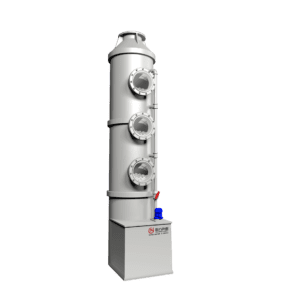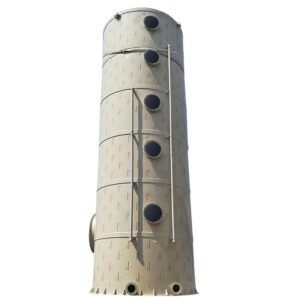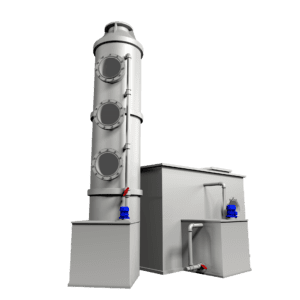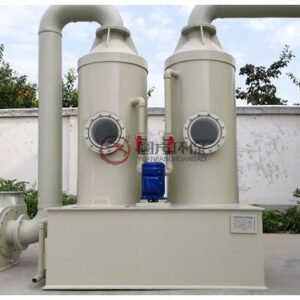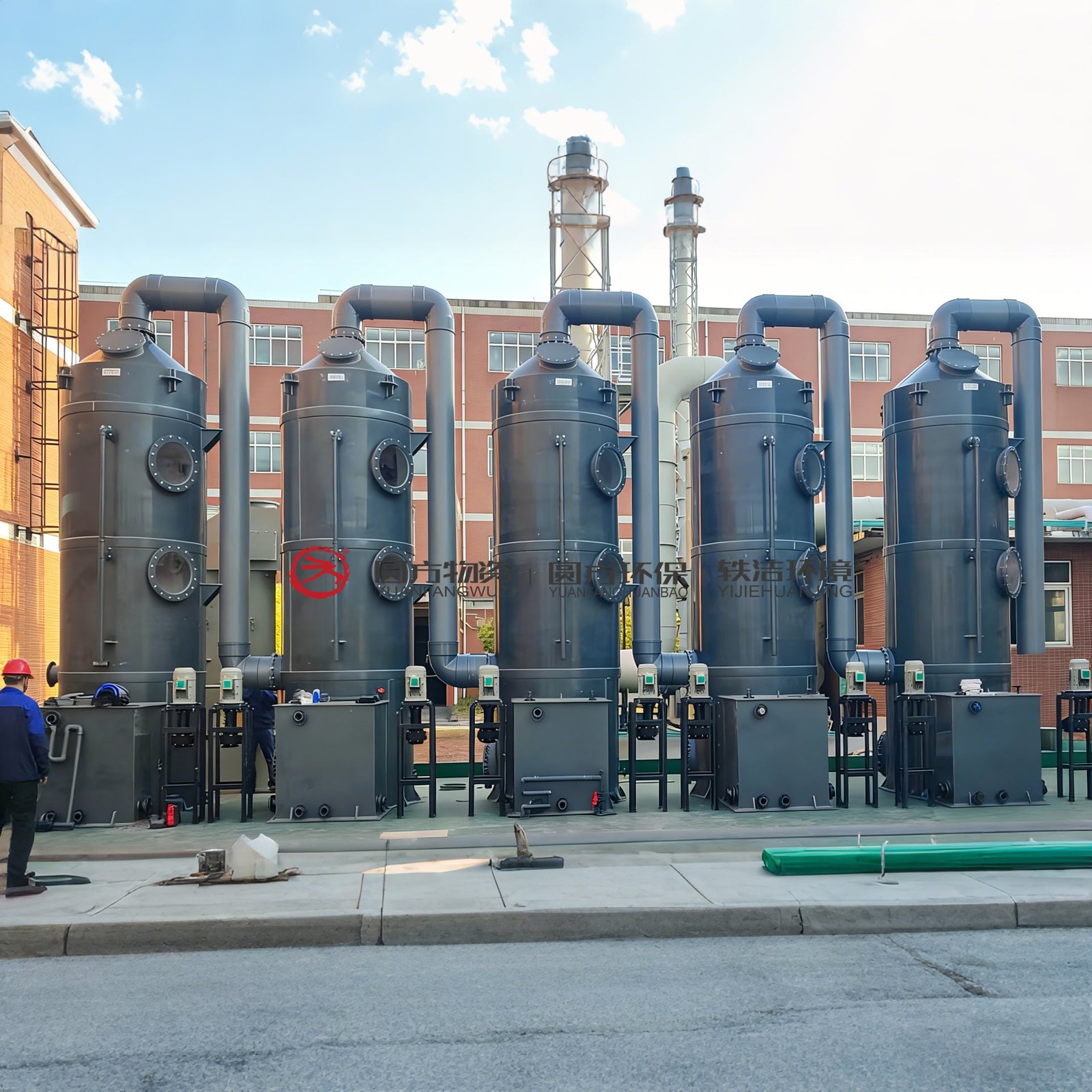
The PVC Wet Scrubber is a high-performance air pollution control system engineered for aggressive industrial exhaust containing acidic gases, chlorine (Cl₂), hydrogen chloride (HCl), and other corrosive contaminants. Constructed entirely from rigid Polyvinyl Chloride (PVC) , this scrubber offers exceptional chemical resistance, making it the ideal choice for chemical processing, electroplating, pharmaceutical, and metal finishing industries where standard materials fail prematurely .
Unlike carbon steel or FRP alternatives, PVC provides inherent resistance to a wide range of acids, alkalis, and oxidizing agents, ensuring decades of reliable service in the harshest environments .
Why Choose PVC Wet Scrubber?
| Feature | Benefit |
|---|---|
| Superior Chemical Resistance | PVC withstands attack from hydrochloric acid, sulfuric acid, chlorine gas, and caustic solutions—materials that rapidly corrode metal equipment |
| Lightweight Construction | Easier to install and support compared to metal towers, reducing structural requirements |
| Cost-Effective | Lower material and fabrication costs than stainless steel or exotic alloys |
| Seamless Welded Joints | Heat-welded construction ensures leak-proof integrity for zero fugitive emissions |
| Low Maintenance | Non-corroding surfaces resist scaling and buildup, minimizing cleaning requirements |
PVC Wet Scrubber Working Principle
The PVC wet scrubber operates on the principle of gas-liquid absorption to remove pollutants from industrial exhaust streams :
-
Gas Inlet: Contaminated exhaust gas enters the bottom of the scrubber tower through a tangential or bottom inlet.
-
Packed Bed Contact: The gas rises through a packed bed of PP Pall rings or multi-faceted hollow spheres , which creates maximum surface area for gas-liquid contact –.
-
Counter-Current Scrubbing: Scrubbing liquid (water, caustic solution, or chemical reagent) is sprayed from the top and flows downward, contacting the rising gas stream. Pollutants are absorbed, neutralized, or chemically reacted with the liquid
-
Mist Elimination: Clean gas passes through a PVC demister pad or chevron mist eliminator to remove entrained droplets before discharge.
-
Liquid Recirculation: Scrubbing liquid collects in the integrated tank at the bottom and is recirculated by a corrosion-resistant pump, minimizing water and chemical consumption .
PVC Wet Scrubber Technical Specifications
| Parameter | Details |
|---|---|
| Material of Construction | Rigid PVC (Polyvinyl Chloride), heat-welded construction |
| Design Airflow | 1,000 – 100,000 m³/h (customizable) |
| Operating Temperature | 0°C to 60°C (higher temperatures require PP or FRP alternatives) |
| Pressure Drop | 300 – 1,500 Pa (depending on packing height) |
| Removal Efficiency | Up to 99% for soluble gases and fine particulates |
| Packing Media | PP Pall rings, multi-faceted hollow spheres, or custom media |
| Mist Eliminator | PVC chevron or mesh pad type |
| Spray System | Full-cone nozzles with PVC/PP construction |
| Circulation Pump | Magnetic drive or centrifugal pump, corrosion-resistant |
| Control System | Manual or PLC-automated with pH/ORP monitoring |
PVC Wet Scrubber Key Applications
The PVC scrubber is widely used across industries where corrosive gases are present :
| Industry | Application | Pollutants Treated |
|---|---|---|
| Chemical Processing | Reactor vents, storage tank breathing, process exhaust | HCl, Cl₂, SO₂, NH₃, acid mists |
| Electroplating & Metal Finishing | Chrome plating, anodizing, pickling lines | Chromic acid mist, H₂SO₄, HNO₃, HCl |
| Pharmaceutical Manufacturing | API synthesis, solvent recovery vents | VOCs, acid gases, organic vapors |
| PCB & Electronics | Etching, cleaning processes | Acid fumes, halogenated compounds |
| Water & Wastewater Treatment | Chemical dosing areas, tank vents | H₂S, chlorine, odor control |
| Laboratories | Fume hood exhaust, research facilities | Mixed chemical vapors |
PVC Wet Scrubber Customization Options
Every industrial exhaust stream is unique. We offer complete customization to match your specific requirements:
✅ Multi-Stage Design: 2-stage or 3-stage configurations for complex pollutant mixtures -1
✅ Integrated Pre-Scrubber: For high particulate loads or reactive gases
✅ pH Control Automation: Automatic chemical dosing for consistent performance
✅ Explosion-Proof Options: ATEX/IECEx certified components for hazardous areas -7
✅ Ductwork & Accessories: Complete PVC ducting, fittings, and exhaust fans
✅ Turnkey Installation: From site survey to commissioning and maintenance
Why Partner with Yuanfang EP?
| Advantage | Description |
|---|---|
| 20+ Years Experience | Deep expertise in corrosive exhaust treatment across chemical, plating, and pharmaceutical industries |
| In-House Manufacturing | Full control over quality, cost, and delivery timelines |
| Custom Engineering | Every system designed for your specific gas composition, concentration, and airflow |
| Full Service Package | Design → Fabrication → Installation → Commissioning → Maintenance—one source, one responsibility |
| Proven Track Record | Hundreds of successful installations worldwide, including chlorine gas scrubbing for chemical plants -8 |
PVC Wet Scrubber Project References
Our PVC scrubbers have been successfully deployed for:
-
Chlorination workshop exhaust: 5,000 m³/h, Cl₂ + ZrCl₄, 99% efficiency with 2-stage ferrous chloride + 3-stage caustic scrubbing
-
Electroplating facility: Chrome acid mist removal, 15,000 m³/h
-
Chemical storage tank farm: HCl and ammonia vapor control
-
Pharmaceutical R&D center: Multi-component VOC and acid gas treatment
Get Your Custom Quote
Ready to solve your corrosive exhaust challenges? Provide us with your process parameters:
📌 Required Information:
-
Gas composition & concentration
-
Airflow rate (m³/h or CFM)
-
Operating temperature
-
Duty cycle (continuous or batch)
-
Site constraints (space, access)
“Engineered for Corrosion. Built to Last.”