

In chemical production, the relentless stream of hydrogen chloride exhaust gas once cast a lingering shadow over business owners—until the emergence of the falling film absorption tower turned “waste gas” into “treasure.”
Efficient recovery of hydrogen chloride gas has long been a shared challenge in the chemical industry. Traditional hydrochloric acid recovery methods, such as packed tower absorption and water washing towers, often suffer from low efficiency, high energy consumption, and low product concentration, alongside significant environmental pressures.
In recent years, the maturation and application of falling film absorption tower technology have fundamentally transformed this landscape, offering an effective solution to the challenge of hydrochloric acid recovery.
This equipment not only efficiently processes hydrogen chloride gas generated during chemical processes but also converts it into economically valuable hydrochloric acid products, achieving both environmental protection and economic benefits.
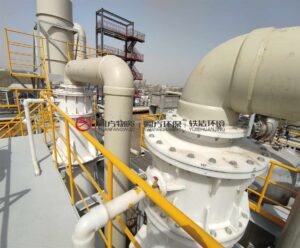
01 Technical Principle: How Does Falling Film Absorption Tower Work?
The exceptional performance of falling film absorption towers in hydrochloric acid recovery stems from their unique structural design and working principle.
Unlike traditional absorption equipment, falling film absorption towers are equipped with special liquid distribution devices that ensure the absorbent liquid forms a uniform film along the inner wall of the pipes.
When hydrogen chloride gas enters the top of the absorber and comes into co-current contact with the liquid flowing as a film along the pipe wall, the HCl rapidly dissolves into the liquid.
This design ingeniously addresses the thermal effects of the absorption process. Hydrogen chloride dissolution is an exothermic process, which traditionally limits absorption efficiency and acid concentration in conventional equipment.
The falling film absorption tower, however, continuously removes the heat released during dissolution through cooling water on the shell side, maintaining a low-temperature absorption environment, thereby enabling the production of high-concentration hydrochloric acid products.
Under appropriate temperatures, the falling film absorption tower can steadily produce hydrochloric acid with concentrations up to 38%. This finished acid collects at the bottom of the equipment, ready for pumping and storage.
For unabsorbed residual hydrogen chloride gas and any inert gases, the system directs them to the bottom of the tail tower, where they further contact process water added from the top, forming dilute hydrochloric acid.
This dilute acid then flows back by gravity to the top of the falling film absorber, serving as supplementary liquid feed, forming a complete closed-loop cycle that maximizes resource utilization.
02 Process Flow: From Waste Gas to Hydrochloric Acid Falling Film Absorption Tower
The process system for hydrochloric acid recovery using falling film absorption towers is an intricately designed operational flow, offering flexible configurations for different application scenarios.
In the vinyl chloride production process, a typical configuration for recovering excess hydrogen chloride employs a series absorption process with a falling film tower and a foam tower.
This system efficiently handles 5-10% excess hydrogen chloride gas in crude vinyl chloride gas, producing a 20-22% hydrochloric acid product while significantly reducing acidic wastewater discharge.
For more complex chemical processes, such as hydrogen chloride recovery in the production of 3,5-dichloro-4-aminotrifluorotoluene, multi-stage falling film absorption systems demonstrate remarkable processing capabilities.
In this process, HCl gas generated during production is first pressurized by a blower and enters the primary falling film absorber from the bottom.
After absorption by the spray device, the gas undergoes gas-liquid separation. The separated gas then enters the second-stage falling film absorber. The tail gas after secondary absorption is finally treated in a two-stage alkaline spray tower to ensure compliance with emission standards.
The absorption liquid circulates in this system. When the hydrochloric acid concentration reaches 30%, it flows out from the bottom of the secondary falling film absorber and is reused as finished hydrochloric acid.
Another innovative system design is the packed column with a cooling circuit, which serves as an alternative to the falling film evaporator, equipped with a condenser and two additional cooling circuits.
In the upper cooling circuit, heat is exchanged and the reflux liquid is pumped; the feed for the lower cooling circuit is the final product generated separately at the bottom.
This design further optimizes heat management and absorption efficiency.
The closed-loop operation mode is increasingly favored in modern chemical plants. One hydrochloric acid production reuse system stores overflow water from the liquid seal tank into a dilute waste acid recovery tank, which is then sent to the falling film absorber to replace the original deionized water.
This design allows for the full utilization of acid and water resources in the waste dilute acid, achieving the goal of zero discharge in hydrochloric acid industrial production.
03 Application Scenarios: Multi-Domain Practical Cases Falling Film Absorption Tower
Falling film absorption tower technology demonstrates significant practical value and economic benefits across various chemical sectors for hydrochloric acid recovery.
In the synthesis process of fosfomycin sodium, esterification reactions generate a large amount of HCl gas. Traditional methods involved directing HCl gas through a vacuum system into ceramic jars filled with water for collection.
This method was inefficient, energy-consuming, occupied large areas, involved multiple hazard sources, and was difficult to control.
After adopting the falling film absorption device, not only was the footprint significantly reduced, but production capacity and safety were also markedly improved, truly achieving the goal of energy saving and cost efficiency.
In the vinyl chloride industry, falling film absorption towers also play a crucial role. In the acetylene-based PVC production process, crude vinyl chloride gas contains 5-10% excess hydrogen chloride gas.
The traditional series process of water washing tower and alkali washing tower resulted in large amounts of acidic wastewater, serious environmental pollution, and significant losses due to dissolution and entrainment of vinyl chloride.
Using falling film absorption towers to cyclically absorb excess hydrogen chloride for hydrochloric acid production not only solves environmental pollution problems but also creates significant economic benefits.
In the fine chemical industry, such as in a recovery method for hydrochloric acid-acetic acid waste liquid, the falling film tower is used in the reduced-pressure distillation stage.
In this system, the volatilized non-condensable gases undergo dehydration and deacidification treatment sequentially, and are then absorbed by water to obtain a hydrochloric acid solution. This eliminates the need to introduce additional hydrogen chloride gas to increase the hydrochloric acid concentration, while enhancing production safety and product quality.
Furthermore, in waste gas treatment, composite multi-stage falling film absorption towers exhibit strong processing capabilities.
This system contacts atomized water droplets with waste gas, effectively absorbing acidic and other harmful gases from industrial exhaust. It addresses the issue of poor absorption efficiency when traditional falling film absorption towers directly use liquid water, making operations safer and more convenient.
04 Advantage Analysis: Why Choose Falling Film Absorption Technology?
The rapid replacement of traditional technologies by falling film absorption towers in hydrochloric acid recovery is attributed to their significant advantages in multiple aspects.
High efficiency is the primary characteristic of falling film absorption towers. This equipment features extremely high absorption intensity and utilization efficiency, capable of rapidly processing large volumes of hydrogen chloride gas and significantly enhancing production capacity.
In the fosfomycin sodium synthesis process, the falling film absorption device successfully resolved the issues of low efficiency and high energy consumption associated with the traditional ceramic jar collection method.
Excellent product quality is another major advantage. Falling film absorption towers can produce hydrochloric acid with concentrations as high as 30-38%, with good purity, allowing direct reuse in production processes.
In the production process of 3,5-dichloro-4-aminotrifluorotoluene, the falling film absorption liquid is circulated and reused until it reaches 30% concentration, after which it is reused as finished hydrochloric acid.
Operational stability and safety are equally noteworthy. Falling film absorbers are characterized by stable operation and convenient control, making the entire production process safer and more reliable.
In the hydrochloric acid-acetic acid waste liquid recovery process, there is no need to introduce hydrogen chloride gas to increase the concentration of the hydrochloric acid solution, significantly improving production safety.
Environmental friendliness cannot be overlooked. Falling film absorption technology can significantly reduce HCl exhaust emissions, ensuring达标排放 (standard-compliant emissions) through multi-stage absorption systems.
In the hydrochloric acid production reuse system, through the cyclic use of waste acid water, zero discharge in industrial production is achieved, completely resolving the environmental pollution caused by large amounts of dilute acid in traditional processes.
Energy saving and economic efficiency are equally prominent. Falling film absorption devices have a small footprint, effectively utilize the heat of dissolution generated during the absorption process, reduce system energy consumption, and achieve the goal of energy saving and cost efficiency.
In the vinyl chloride production process, recovering excess hydrogen chloride to produce hydrochloric acid not only addresses environmental issues but also brings significant economic benefits.
05 System Design and Operational Key Points Falling Film Absorption Tower
To fully leverage the performance of falling film absorption towers, reasonable system design and standardized operation are crucial.
Equipment Selection and Configuration are foundational. The design of the falling film absorber must ensure very uniform liquid distribution on the inner side of the pipes, which is key to guaranteeing high-efficiency absorption.
The QFX® falling film absorber, as a proven, fully corrosion-resistant device, with its special design ensures uniform liquid distribution, maximizing mass transfer efficiency.
Temperature Control is the core of operation. The falling film absorption tower continuously removes the heat released during dissolution through cooling water on the shell side, maintaining a low-temperature absorption environment.
This mechanism allows the system to produce 38% hydrochloric acid product at appropriate temperatures. Improper temperature control directly affects absorption efficiency and product quality.
System Integration methods are diverse. One innovative hydrochloric acid reuse system includes a falling film absorber, three-in-one graphite furnace, hydraulic ejector, liquid seal tank, finished acid tank, and dilute waste acid recovery tank.
This integrated design stores the overflow water from the liquid seal tank into the dilute waste acid recovery tank, which is then sent back to the falling film absorber to replace the original demineralized water, forming a closed-loop cycle.
Multi-stage Series design can significantly improve recovery efficiency. For high-concentration or high-flow hydrogen chloride gas, a multi-stage falling film absorber series configuration can be adopted.
For example, in the production process of 3,5-dichloro-4-aminotrifluorotoluene, two stages of falling film absorbers are set up, supplemented by two stages of alkaline spray towers to ensure compliance with emission standards.
Material Selection significantly impacts equipment lifespan. Due to the strong corrosiveness of hydrochloric acid, falling film absorption towers are typically manufactured from fully corrosion-resistant materials, such as graphite or special alloys.
These materials can withstand the corrosiveness of hydrochloric acid, ensuring long-term stable operation of the equipment.