
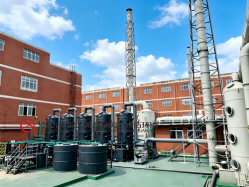
Industrial production processes in the chemical, pharmaceutical, electroplating, metallurgy, laboratory, and battery industries often generate acid and alkali waste gases. These exhaust gases may contain corrosive and harmful substances such as hydrochloric acid (HCl), sulfuric acid mist (H₂SO₄), nitric acid (HNO₃), ammonia (NH₃), hydrogen sulfide (H₂S), and sulfur dioxide (SO₂).
Without proper treatment, these gases can:
- Corrode equipment and pipelines
- Pollute the surrounding environment
- Endanger worker health
- Cause factories to fail emission compliance standards
Therefore, selecting a reliable and efficient acid and alkali waste gas treatment system is essential for modern industrial plants.
Common Types of Acid and Alkali Waste Gas Treatment
Different industrial processes generate different exhaust compositions. Typical examples include:
| Industry | Common Waste Gases |
|---|---|
| Chemical plants | HCl, SO₂, NOx |
| Electroplating | Acid mist, chromic acid mist |
| Pharmaceutical | Organic acid gases |
| Laboratories | Mixed corrosive gases |
| Battery manufacturing | Sulfuric acid mist |
| Fertilizer plants | Ammonia gas |
Understanding gas composition, airflow volume, temperature, humidity, and concentration is the first step in designing an effective treatment system.
Wet Scrubber Systems: The Most Common Solution
Among various treatment technologies, the wet scrubber system is one of the most widely used methods for acid and alkali gas purification.
How Does a Wet Scrubber Work?
A wet scrubber removes pollutants by bringing exhaust gas into contact with a scrubbing liquid. During this process:
- Harmful gases are absorbed into the liquid
- Chemical neutralization reactions occur
- Cleaned gas is discharged through the exhaust stack
For example:
- Acid gases are typically neutralized using alkaline solutions such as NaOH
- Alkali gases such as ammonia are often treated using acidic solutions
Key Factors Affecting Treatment Efficiency
Many factories focus only on equipment size, but actual treatment performance depends more on engineering design.
1. Gas-Liquid Ratio
An improper gas-liquid ratio may lead to insufficient absorption efficiency or unnecessary operating costs.
2. Packing Material Selection
The packing inside the scrubber tower increases contact surface area between gas and liquid. Different gases require different packing types and materials.
Common materials include:
- PP (Polypropylene)
- FRP
- Stainless Steel
3. Residence Time
The exhaust gas must remain inside the scrubber long enough for proper chemical reaction and mass transfer.
4. Spray System Design
Uniform liquid distribution is critical for maintaining stable treatment performance.
Why Stainless Steel Wet Scrubbers Are Popular
For certain applications involving:
- High temperatures
- Corrosive gases
- Long-term industrial operation
Stainless steel wet scrubbers offer significant advantages:
- Excellent corrosion resistance
- Strong structural stability
- Long service life
- Easy maintenance
They are commonly used in chemical plants, laboratories, and industrial exhaust systems with complex operating conditions.
Customized Design Matters
No two factories have exactly the same exhaust conditions.
A suitable acid and alkali waste gas treatment system should be designed based on:
- Gas composition
- Airflow volume
- Temperature
- Humidity
- Emission standards
- Installation environment
An improperly designed system may result in:
- Low purification efficiency
- Excessive pressure drop
- High chemical consumption
- Frequent maintenance issues
This is why professional engineering experience is often more important than simply selecting equipment from a catalog.
Future Trends in Industrial Exhaust Gas Treatment
As environmental regulations become stricter worldwide, industrial air pollution control systems are moving toward:
- Higher purification efficiency
- Lower energy consumption
- Intelligent monitoring systems
- Corrosion-resistant materials
- Customized integrated solutions
Modern factories increasingly require stable, long-term, and energy-efficient exhaust gas treatment systems.
Conclusion
Acid and alkali waste gas treatment is not just about installing equipment — it is about designing a reliable and efficient system that matches real operating conditions.
A properly designed wet scrubber system can:
- Improve environmental compliance
- Protect equipment and personnel
- Reduce operating costs
- Ensure long-term stable operation
At Yuanfang Environmental, we specialize in customized industrial exhaust gas treatment solutions for chemical, laboratory, and industrial applications.
If you have waste gas treatment requirements, feel free to contact us with your gas parameters and operating conditions for technical discussion and preliminary solution recommendations.